
Metal colours for wedding bands: yellow, white, rose and platinum
30 June 2026
The most important decision that is often made too quickly
When a couple visits the jewellery store to choose wedding bands, the conversation almost always starts with width, profile and whether to include a stone. The metal colour, yellow, white or rose, is often taken for granted: "this is what she/he usually wears", "we've always looked at yellow wedding bands", "my mother has white". The decision is made in five minutes, and they move on to other details.
Yet metal colour is actually the single most important decision you will make regarding your wedding bands. It is the one feature you will not be able to alter later without crafting a completely new band. Width and profile are technical details resolved in the workshop, and stones are an addition, but the metal colour is the very essence of the ring. It is what you will see every time you look at your hand for decades to come.
This guide walks you through everything worth knowing before you decide: what constitutes each gold colour, who it suits best, how it affects the look of the wedding band, and how to choose when you like all three.
What actually distinguishes the three gold tones
Before discussing aesthetics, it is worth understanding the technical details behind each colour. All three types of gold originate from the same metal: pure yellow gold. The difference lies in what is added to create the final alloy.
Yellow gold is closest to gold's natural form. In a 14k alloy (585 fineness), there is approximately 58.5% pure gold, with the remainder being silver and copper in balanced proportions that preserve its classic, warm tone. In 18k gold (750 fineness), the gold content increases to 75%, making the tone richer and warmer.
White gold is created when palladium (or nickel and other metals in older alloys) is added to yellow gold. The resulting alloy itself is silvery-grey, so after crafting, the ring is plated with a precious layer of rhodium, giving it a characteristic bright, cool lustre. Without this rhodium layer, white gold would have a subtle yellowish undertone.
Rose gold contains a significantly higher proportion of copper, which gives it its warm, blush tone. The more copper present in the alloy, the more pronounced the rose shade. In 14k rose gold, copper can account for up to 30% of the alloy, which also makes it harder than classic yellow or white gold: an important characteristic for a wedding band worn 24 hours a day.
This technical distinction has practical implications: rose gold is the hardest, yellow gold is in the middle, and white gold with a rhodium coating requires periodic re-plating over time. Platinum also features a naturally white colour that does not change over time.
Yellow gold for wedding bands: an unchanging classic
Yellow gold is the most traditional choice for wedding bands. For generations across Serbia and the entire region, a yellow wedding band was the standard choice. When people mention a "wedding band", most older generations picture a classic yellow band in 14k or 18k gold.
There are several reasons why yellow gold retains its classic status for wedding bands today. Firstly, its warm tone does not change over time, and there is no rhodium layer to wear away. A yellow gold wedding band looks almost identical ten years after the wedding as it did on the first day.
Secondly, yellow gold ages beautifully. The fine microscopic scratches that appear over time give it a soft, gentle lustre that many consider even more beautiful than factory perfection. Thirdly, yellow gold is universally understood as a symbol, timeless, recognisable, classic.
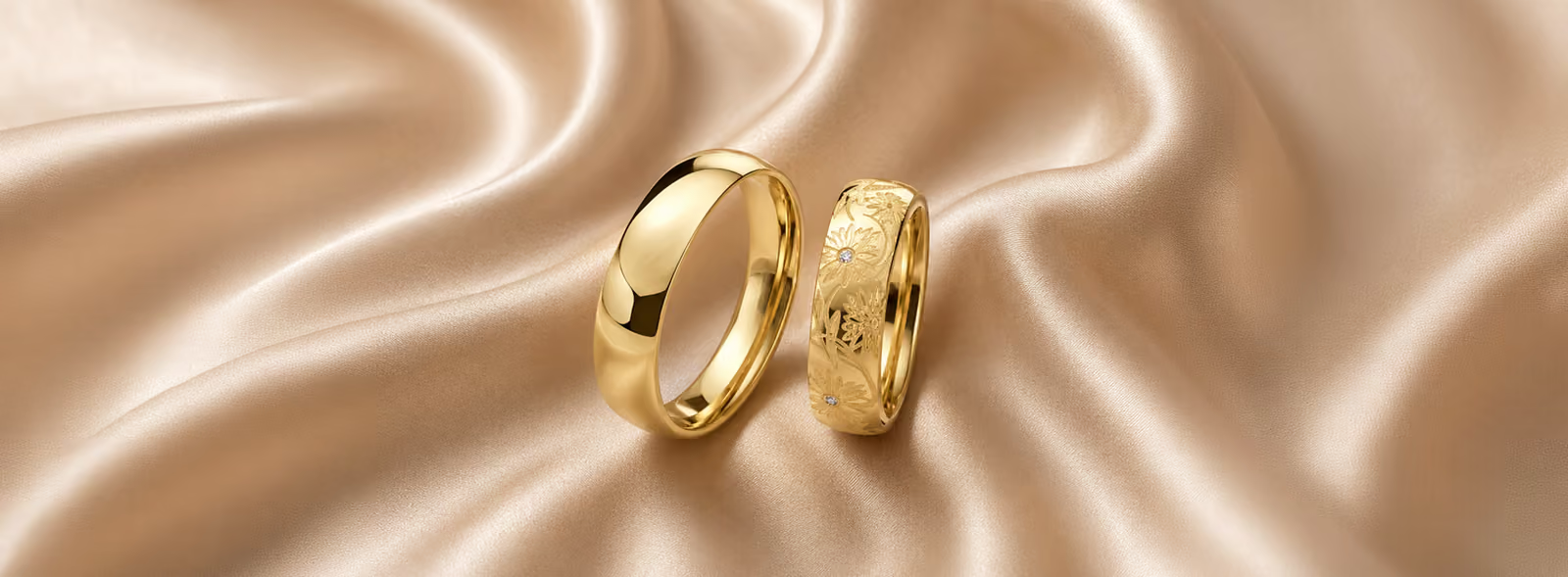
Who looks best in yellow gold: people with warmer, golden skin undertones, those who already wear yellow gold jewellery every day, and couples looking for a wedding band with a classic, timeless character. Yellow gold is also the choice of many couples who want a wedding band that naturally fits family tradition, especially if passing down wedding bands from older generations.
What is worth considering: yellow gold is less neutral than white gold, carrying a clear statement, which is both an advantage and something to embrace. If your bride-to-be wears mostly silver-toned jewellery, a yellow gold wedding band may feel a little foreign. In that case, yellow gold wedding bands are still worth trying on in person, as they often turn out to match far better than expected.
White gold for wedding bands: a modern, refined tone
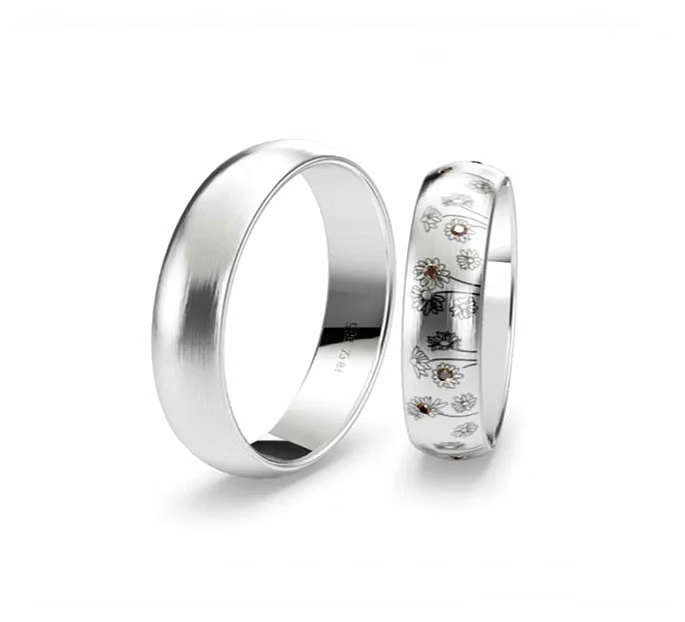
Over the last twenty years, white gold has become almost equal to yellow gold in popularity for wedding bands, and in some urban areas has even taken top spot. The reason is simple: white gold looks modern, neutral, and easily pairs with all other jewellery, from silver to platinum.
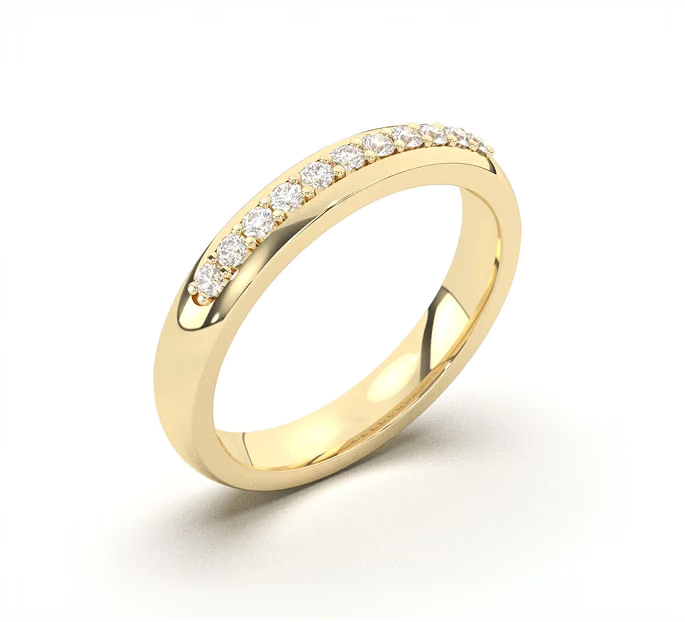
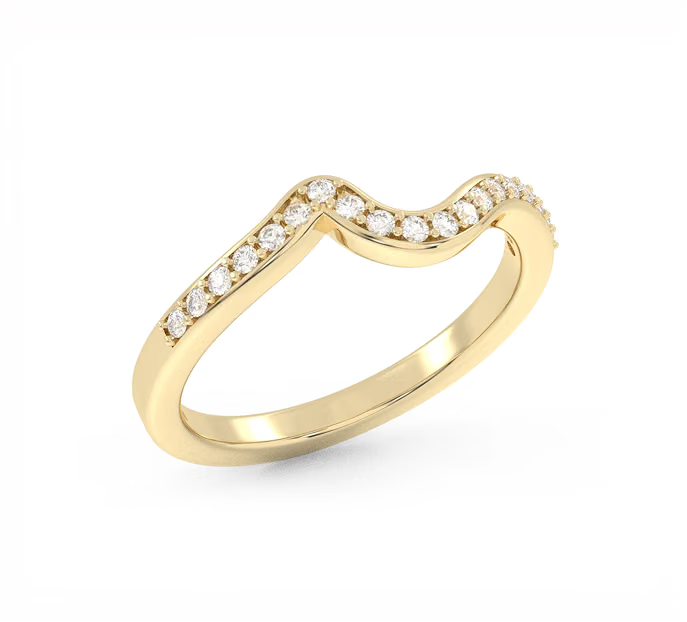
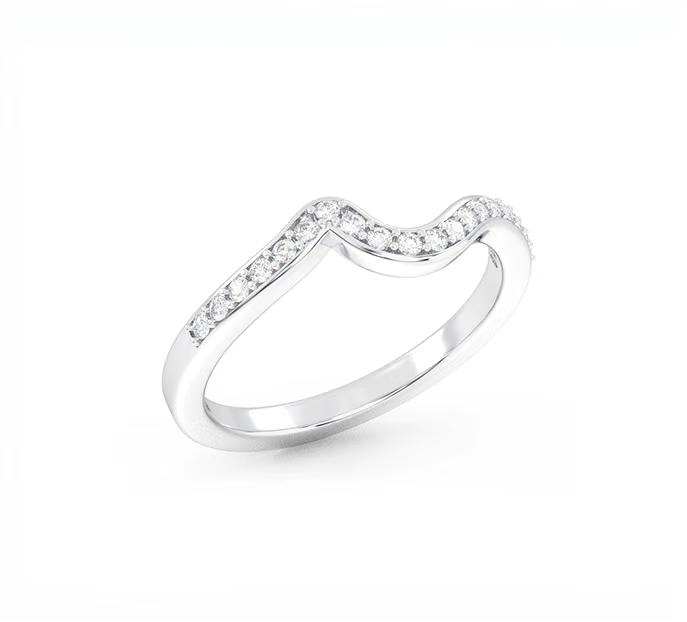
With wedding bands, white gold creates one key aesthetic effect: a diamond set on a white gold band appears larger and brighter. The cool, neutral tone of the metal introduces no colour into the stone, allowing all light effects to rely on the diamond itself. This is why many modern wedding bands with diamond accents are made of white gold, a combination that enhances the stone's brilliance.
White gold also has a specific feature known as the rhodium layer, a thin layer of precious metal applied to the band to give it a characteristic bright, cool shine. Over time, after a few years of everyday wear, this layer gradually wears away, so the wedding band may slightly change tone and become a little warmer, with a yellowish undertone. This is neither a flaw nor a sign of poor quality, but a natural characteristic of the material. If desired, it can be restored by re-rhodium plating at the jeweller's.
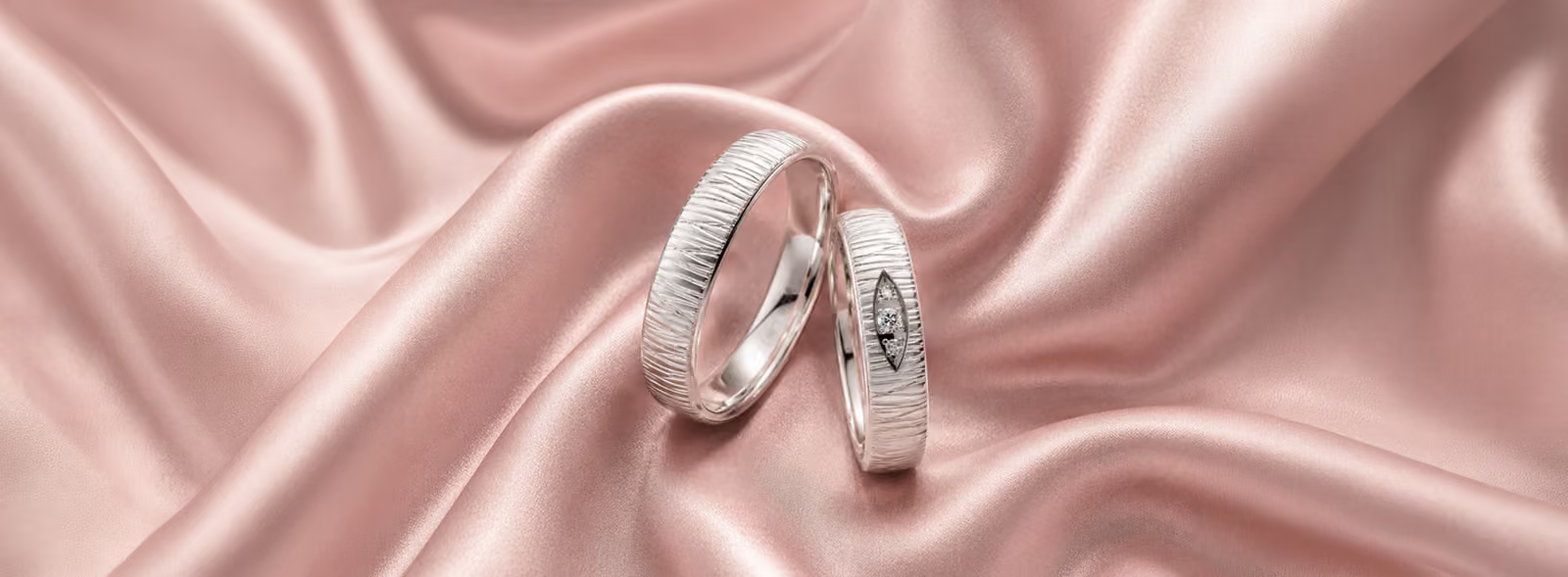
Who looks best in white gold: people with cooler, bluish or pinkish skin undertones, those who wear silver, platinum or mixed metals in everyday life, and couples desiring a contemporary, refined look. White gold is also an ideal choice when partners have different style preferences. It is neutral, fitting naturally with both men's and women's tastes.
What is worth considering: the rhodium layer should be reapplied roughly every 3-5 years, which is a standard service at the jeweller's and does not represent a major cost. For couples seeking a zero-maintenance wedding band, this is something to know in advance. The complete collection of white gold wedding bands can be viewed in person at the jewellery store. The shade often turns out looking completely different than in photos.
Rose gold for wedding bands: a romantic tone with character
Rose gold is the youngest classic. Although used since the 19th century, it experienced a true comeback in fashion only in the last fifteen years or so. Today, it is an increasingly popular choice for younger couples who want a wedding band with character and a unique identity.
The character of rose gold lies in that subtle flush of undertone that feels warm, yet not like classic yellow, and modern, yet not like white. It is a metal that visually shifts the wedding band beyond traditional boundaries, without making it unusual or difficult to accept. A rose gold wedding band feels romantic, photogenic, and clearly stands out on the hand.
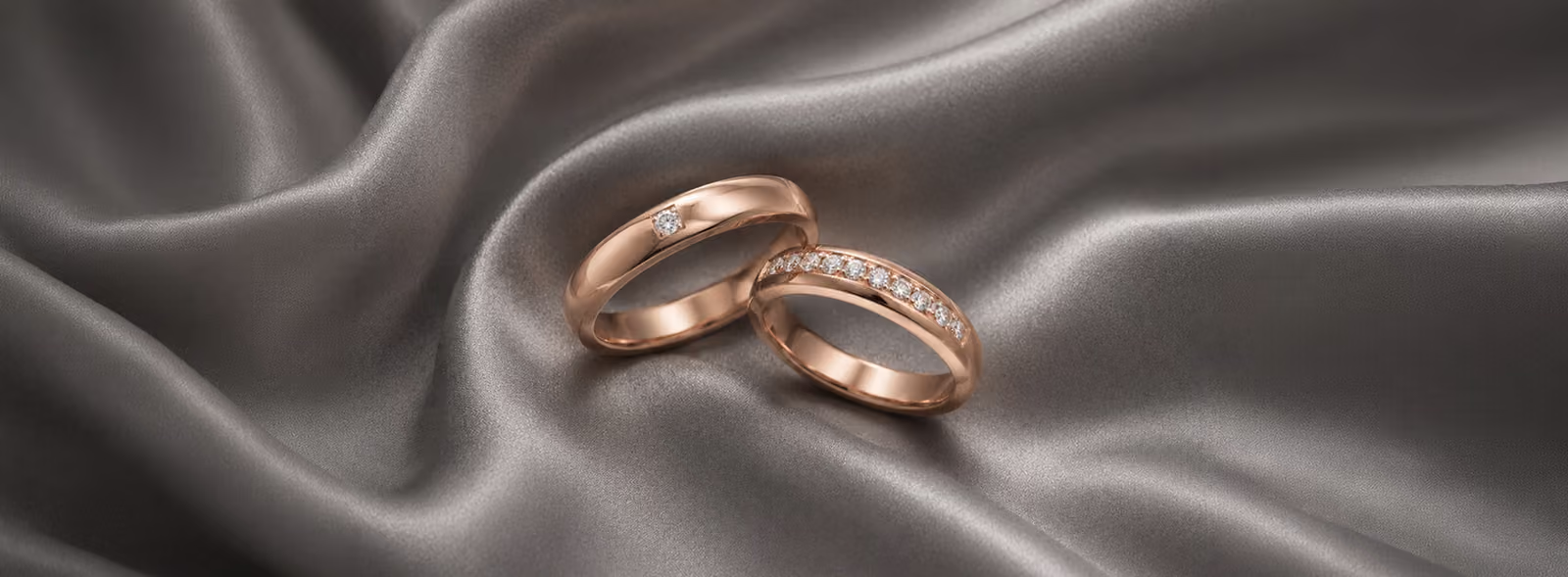
Technically, rose gold has one practical advantage that is often overlooked: it is the hardest of the three gold tones. The high proportion of copper in the alloy makes it more scratch-resistant than classic yellow or white gold. For a wedding band worn 24 hours a day, through all tasks and situations of everyday life, this is a significant practical benefit, especially for men who work with their hands or play sports often.
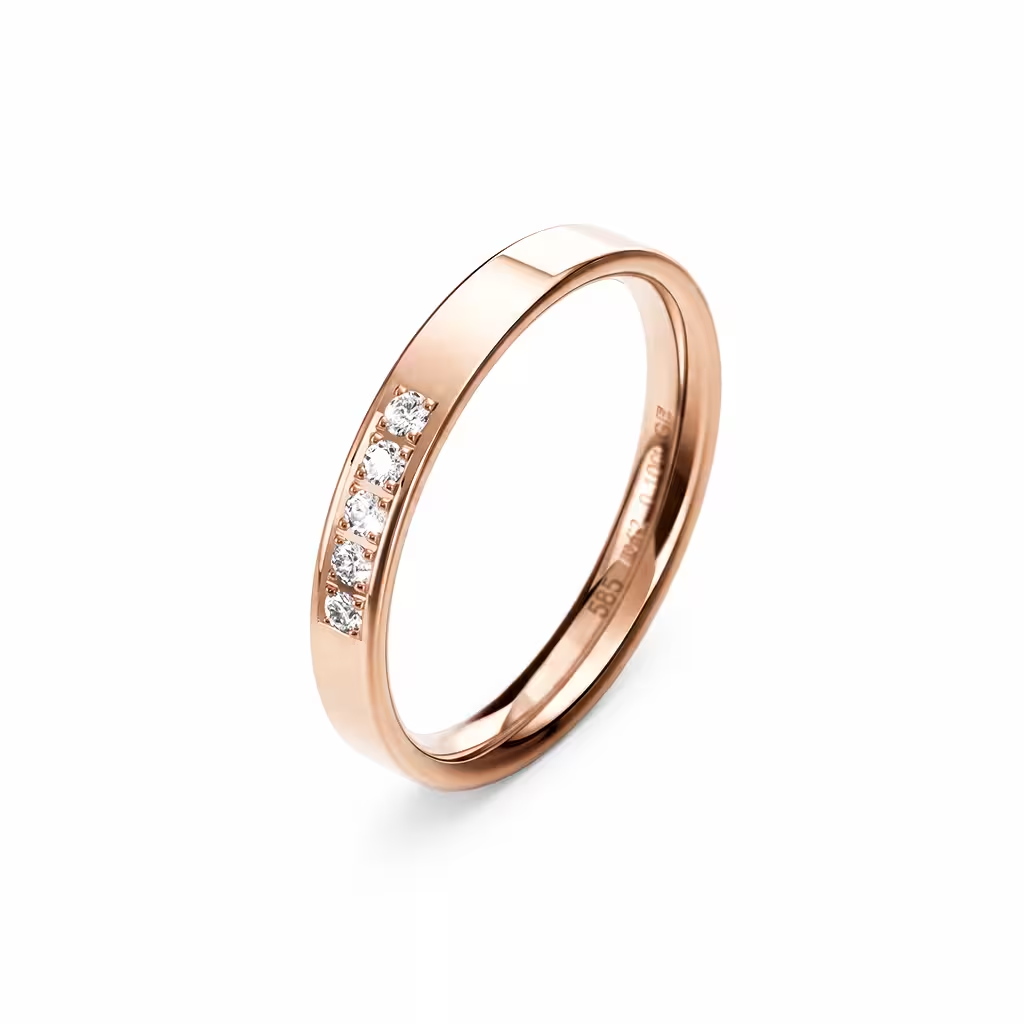
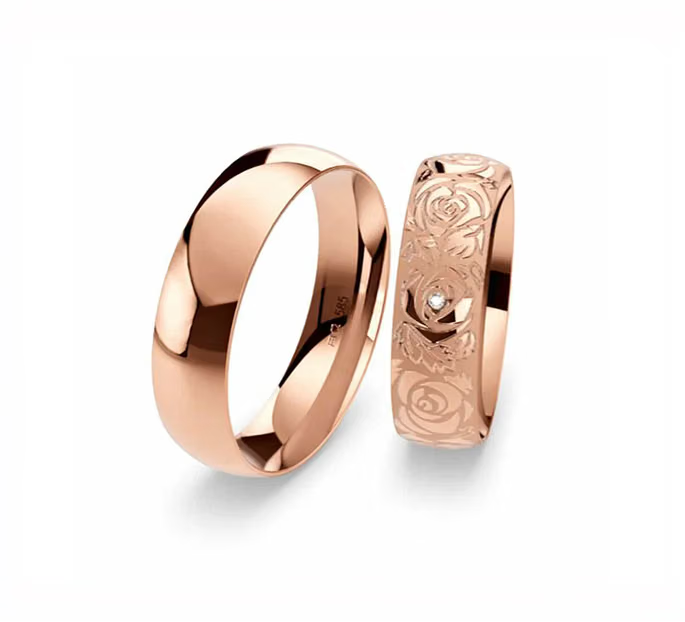
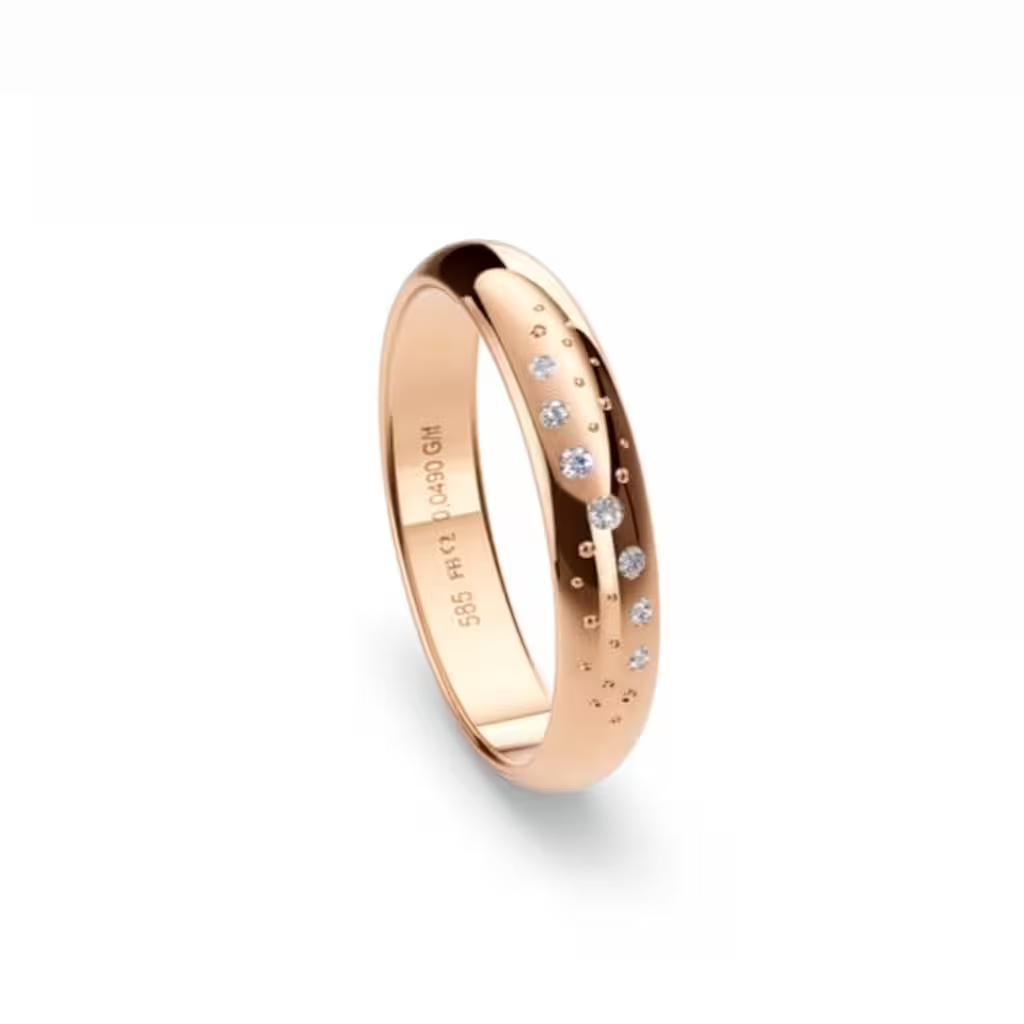
Who looks best in rose gold: virtually everyone, rose gold possesses the rare quality of naturally complementing all skin tones, from the fairest to the darkest, because its warm undertone harmonises with the skin's natural glow. This makes it exceptionally photogenic. It looks best on couples who want a wedding band with character that shows, but not too loudly; those who do not want a completely traditional choice, nor an extreme modern one; and couples who want their wedding bands to be noticed without being experimental.
Platinum: when you want a white colour that never changes
Although platinum often visually resembles white gold, technically they are two completely different metals. White gold is an alloy, yellow gold combined with palladium, featuring a rhodium layer that wears away over time. Platinum is naturally white in colour and retains that tone for decades without any plating or restoration. Furthermore, platinum is significantly denser than gold; an identical platinum wedding band is around 60% heavier than one in 18k gold, giving it a characteristic sense of solid weight felt the moment it is placed on the finger.
There are several practical advantages. Platinum requires no rhodium plating, its colour is permanent. It is almost entirely hypoallergenic, making it an excellent choice for sensitive skin. Over the years, platinum develops a soft matte patina that many consider even more beautiful than factory polishing; if desired, it can also be restored to a high polish. In terms of hardness and resistance to daily wear, platinum surpasses most precious metals.
Price is the main difference compared to white gold; a platinum wedding band is usually 30-50% more expensive than an equivalent 18k white gold band, due to greater material density and a more demanding crafting process. For couples prioritizing durability and freedom from maintenance, that price difference often pays for itself over decades of wear. Platinum is a particularly popular choice for those with sensitive skin, couples who do not want to worry about rhodium plating every few years, and men who prefer a wedding band with a satisfying weight. Platinum also does not lose weight or wear down over years of use, differing significantly from gold in this respect. You can view the platinum wedding band collection at the following link.
Mixed-metal combinations: when a wedding band combines two tones
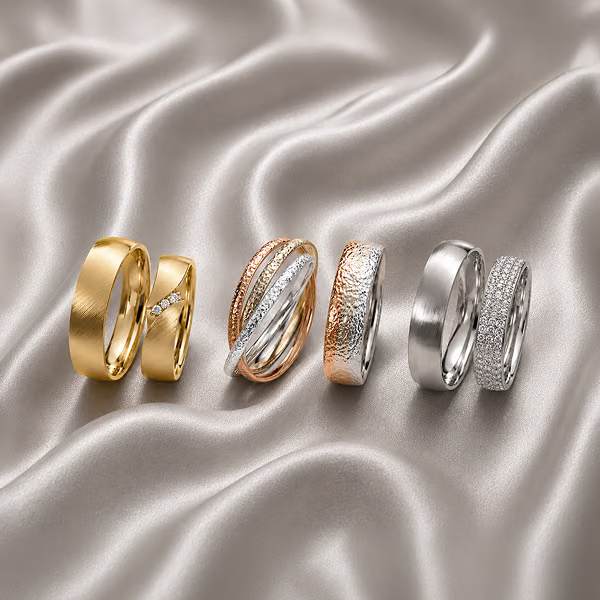
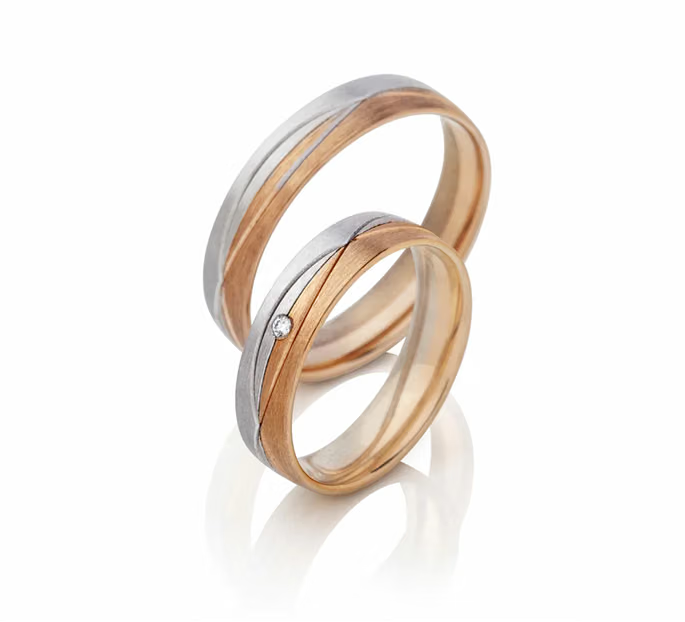
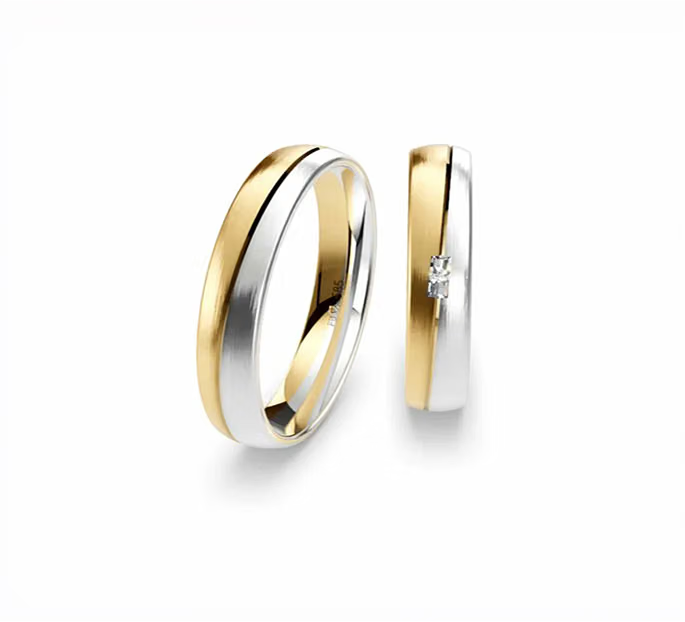
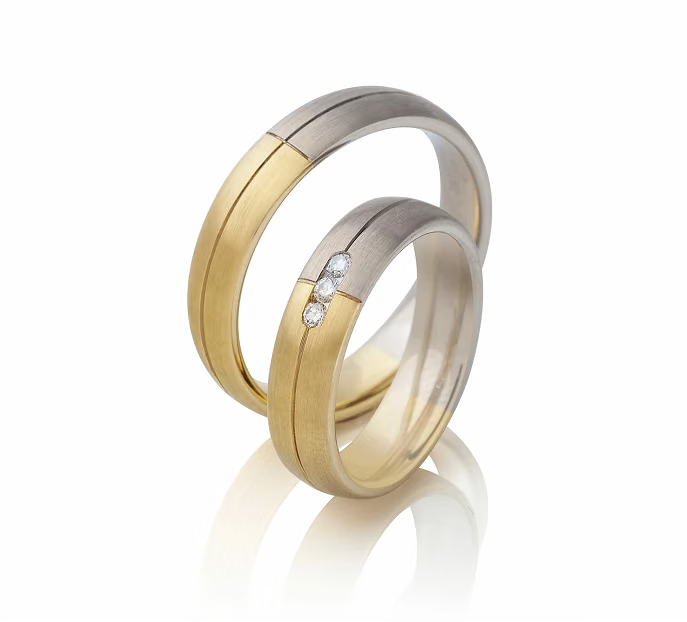
More and more couples today choose wedding bands that combine two or even three tones of gold in a single ring. The most common variations are yellow-white, rose-white, and less frequently yellow-rose. This is not an experimental choice; combining metals in wedding bands is traditional in some European jewelry-making traditions, particularly German.
Two-tone wedding bands offer several advantages. Firstly, they look visually richer than single-tone rings, especially in minimalist designs where two shades lend character without the need for stones. Secondly, they allow for compromise when partners have different preferences, yellow gold for him, white for her, both joined in a single design. Thirdly, they easily pair with other jewellery in either tone, which is practical when a couple wears a mix of metals daily.
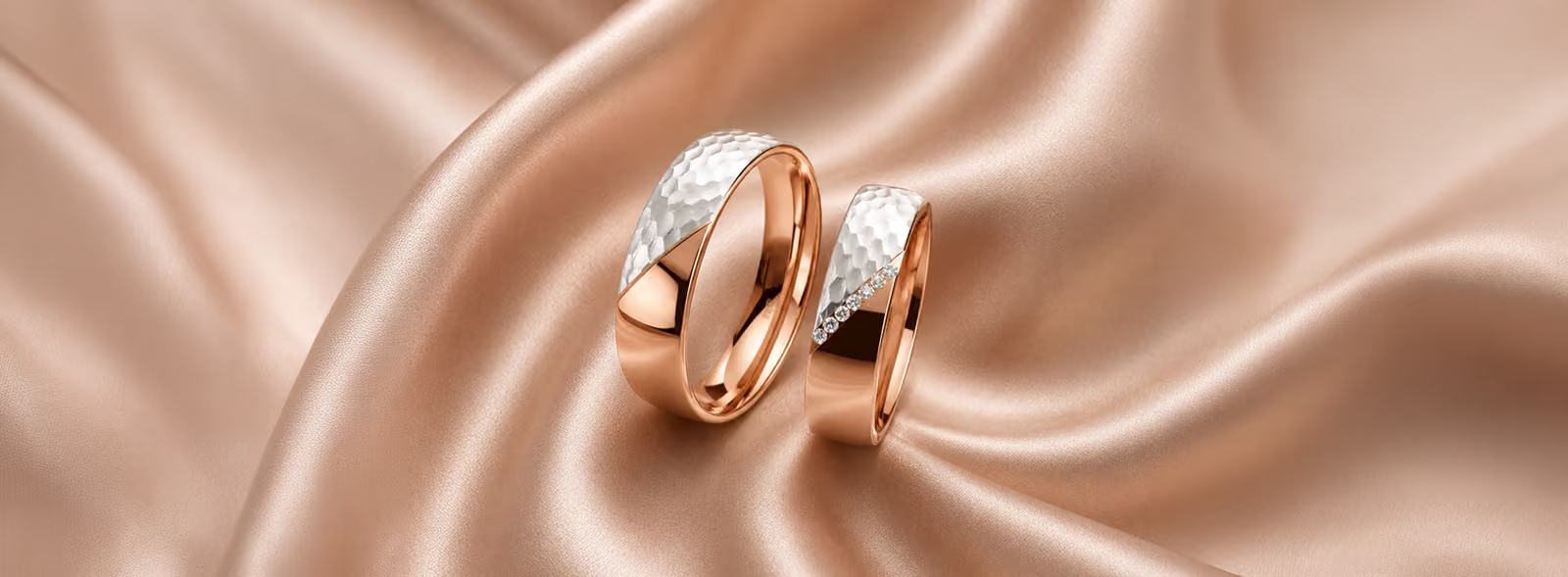
The most common designs for two-tone wedding bands:
- Two layers stacked: the upper section of the band is one colour, the lower another
- Central band in a contrasting colour, a white strip through the middle of a yellow gold band, or vice versa
- Side elements in a second colour, the main body is one colour, with discreet accents of another along the edges
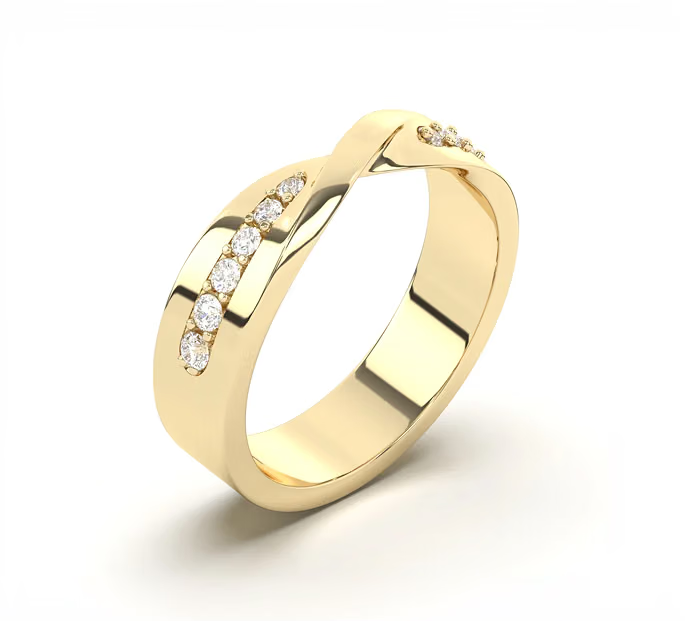
- Spiral or diagonal pattern: two metals intertwined
Combinations work best when the same approach is applied to both wedding bands in a pair, not necessarily producing identical rings, but following the same design logic. We have written more details on how to match wedding bands with an engagement ring (including situations where the engagement ring itself features mixed metals) in our guide on how to match a wedding band with an engagement ring.
How to choose the right tone for you: practical criteria
While all theory is useful, when a couple actually faces the decision, it is most practical to consider three concrete factors.
Factor 1: skin tone
The simplest test is to place your hand next to a white sheet or piece of white paper and examine the skin undertone.
Warm undertones (golden, yellowish, olive): yellow gold and rose gold look natural. White gold can look slightly washed out, it works, but does not enhance the appearance.
Cool undertones (pinkish, bluish, porcelain): white gold looks best, with rose gold as another wonderful choice. Yellow gold can appear a little pronounced, which some couples love and others do not.
Neutral undertone (combination): all three tones work, free choice.
This is not a strict rule; many people with warm undertones wear white gold and vice versa. But the test is a good starting point when you have no other way to decide.
Factor 2: Jewellery you already wear
A good approach is to look at what dominates your everyday jewellery: the chain you wear, your watch, your earrings. A wedding band fits best when it matches your existing palette, as it is worn alongside other jewellery almost every day.
If there is a mix of metals in your jewellery, that is a sign you have complete freedom; a combination wedding band or rose gold (which pairs well with both tones) are safe choices.
Factor 3: Engagement ring
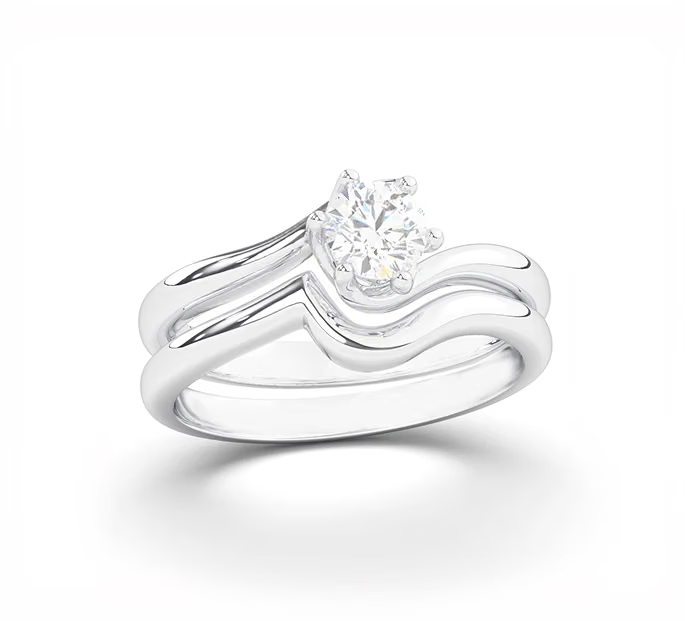
If one partner already has an engagement ring, the wedding band usually matches its metal tone. This is the most important rule for couples who are already engaged: the wedding band and engagement ring are worn together on the same hand every day, so conflicting tones create a visual mismatch. We wrote about matching engagement rings and wedding bands in detail in a dedicated guide.
If the engagement ring is a combination of metals (e.g. rose and white gold), the wedding band can match either tone, or can itself be a combination, offering extra flexibility.
Do men's and women's wedding bands have to be the same metal?
They do not have to be, but there are practical reasons why this is often recommended.
The traditional approach is for the couple to have wedding bands made of the same metal—this visually connects the couple and provides a unified symbol. This is the safest choice and requires no extra thought.
A modern approach allows each partner to choose the tone that suits them best, so if white gold suits her and yellow gold suits him, both can have different wedding bands. For such a combination to work as a set, it is worth having wedding bands with the same design (width, profile, finish), differing only in metal tone.
The most flexible solution is for both partners to choose combination wedding bands containing both tones—yellow and white gold, for example. That way, each person sees "their" metal in their wedding band, while maintaining a visual connection as a couple.
Renowned brands working with all metal tones
Alongside models from the Andrejević family workshop, at Zlatara Andrejević you will also find carefully selected pieces from world-famous brands specialising in wedding bands. The German house Breuning, renowned for precision craftsmanship, offers collections in all three gold tones as well as all possible combinations, from classic yellow gold to state-of-the-art bicolor models. Saint Maurice also offers a broad range across all metal tones, specialising in subtle textural variations that further alter the impression of colour.
Special gold shades for discerning customers. Both brands offer tones in their premium collections that go beyond the classic "yellow / white / rose" categorization. These include Roségold (classic rose shade according to German standards), Rotgold (more intense red gold with a higher copper content), Gold Sunrise (a warm transition between yellow and rose, like a sunrise), Gold Blush (subtle rose, an exceptionally soft tone), Gold Honey (honey-warm transition between yellow and rose), Gold Sun (intense sunny yellow with enhanced brilliance) and Weißgold (classic white gold in German standardization). In addition, both brands offer platinum wedding bands, ranging from classic designs to designer models combining platinum and gold. This range is why Breuning and Saint Maurice are particularly appreciated by customers with a refined taste for metal nuances.
When choosing a brand, the metal tone is usually available in all three variations, allowing you to decide on the design first and the colour second.
Frequently asked questions about wedding band metal colour
Is one colour of gold worth more than another?
No—all three metal tones are made from gold of the same karat purity (14k or 18k), so their intrinsic value is essentially the same. Minor price differences arise from the cost of palladium (in white gold) and copper (in rose gold), but these are negligible in the context of the total price of a wedding band. All three tones retain the value of gold over time.
Which gold tone is most resistant to daily wear?
Rose gold is technically the most durable due to its high copper content. Yellow gold comes second, while white gold, though hard, requires a rhodium plating layer that needs to be renewed over time. For couples who work with their hands or play sports often, rose gold may be the most practical choice. Overall, platinum is the most durable metal.
Does white gold really turn yellowish over time?
Yes, but only after several years of daily wear when the rhodium layer gradually thins. The change is subtle and doesn't bother many people, but re-rhodium plating can be done on request. This is typically done every 3–5 years as a standard service, which is now charged due to the increased price of rhodium.
What if I change my mind: can a wedding band's colour be changed?
Unfortunately no, the colour of a wedding band cannot be changed without crafting an entirely new band. The existing wedding band can be melted down and its material reused for a new one (adding a new quantity of gold in a different colour), but this is essentially a new wedding band, not an adaptation of the existing one. This is why you should select your colour carefully right at the start.
Is rose gold just a trend, or is it here to stay?
Rose gold has been used since the 19th century and is traditionally an important category in Russian and European jewellery heritage. Its modern resurgence is not a fleeting fad, but a return to a classic that was temporarily overshadowed. More and more global brands feature permanent rose gold collections, signaling that the metal is not merely a "trend of the season".
How do we know which tone truly suits us best?
The best way is to try all three tones in person at a jewellery store. Three minutes of trying on different wedding bands on your hand brings more clarity than an hour of online research. Many couples who arrive "certain" they want one tone end up choosing another once they see how it looks in person.
Do diamonds look different on different metal tones?
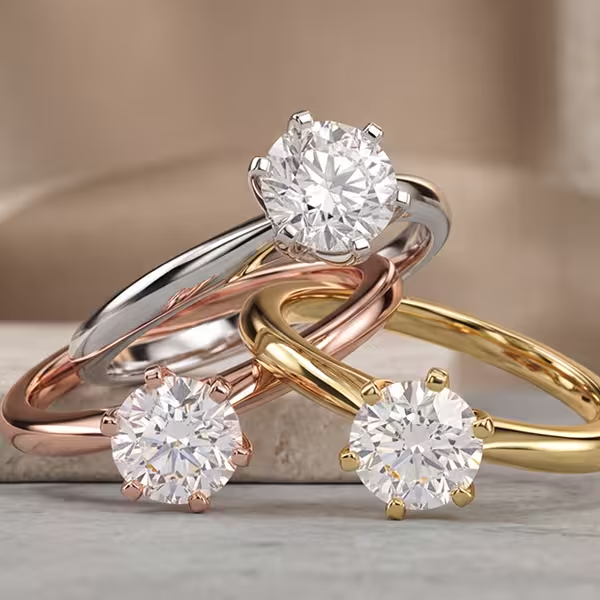
Yes—and this is important to know. On white gold, a diamond appears larger and brighter because the cool tone introduces no added colour into the stone. On yellow gold, a diamond gains a warm, soft glow and feels more classic. On rose gold, a diamond has a subtle blush hue surrounding it, which looks romantic and exceptionally photogenic. All three options are valid; it is simply a matter of which effect you desire.
Visit Zlatara Andrejević and try them on in store
Metal colour is a decision best made in person, with wedding bands on your hand under store lighting. Photography rarely conveys the true nuance of a metal, particularly with white gold where photo lighting can alter perception, or with rose gold where tone varies between models. At Zlatara Andrejević in Belgrade, our team shows you all three options without pressure, including all variations of width and finish, so you can decide with confidence once you see them in person.
Visit the main wedding bands page to view the full collection, or explore specific subcategories: yellow gold wedding bands, white gold wedding bands, rose gold wedding bands and diamond wedding bands. View our store locations and book an appointment at a time that suits you.