
The 4Cs of a diamond: a simple guide to diamond quality
10 March 2026
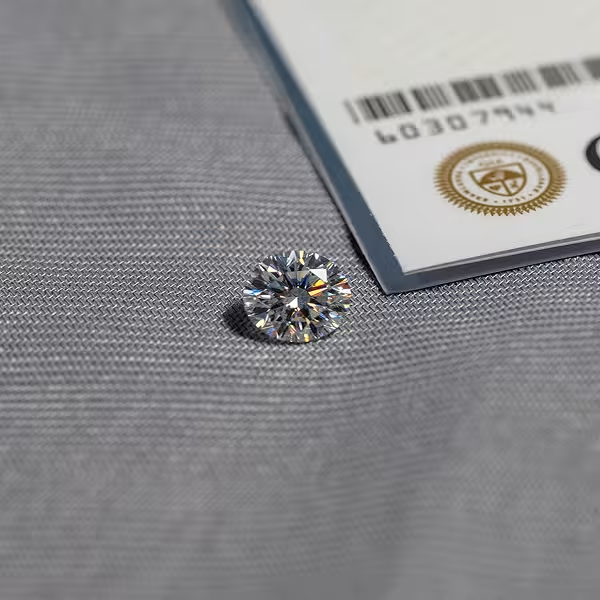
When exploring diamonds for the first time, one almost always encounters the concept of the 4Cs of diamonds.
At first glance, it might sound like technical jargon reserved for gemmologists. In reality, the 4C rule is a simple way to understand what influences a diamond's appearance and quality the most.
This grading system was developed by the GIA (Gemological Institute of America) and is now the international standard for evaluating diamonds.
Source: Gemological Institute of America: The 4Cs of Diamond Quality
The four letters represent the four main characteristics of the stone:
- Carat: diamond weight
- Cut: cut quality
- Color: colour
- Clarity: clarity
Overview of the 4Cs of a diamond:
Feature
What it means
How it affects the diamond's appearance
Carat (weight)
The weight of a diamond expressed in carats. One carat equals 0.2 grams.
A higher carat means a larger diamond, but does not guarantee a more beautiful appearance.
Cut
The way a diamond has been cut and the proportions of the stone.
It has the greatest influence on the diamond's brilliance, light reflection and fire.
Colour
The degree of colourlessness of a diamond, usually graded on a scale from D to Z.
More colourless diamonds are rarer and often more valuable, but small differences in colour are often not easily visible to the naked eye.
Clarity
The presence of natural inclusions or microscopic imperfections within the stone.
Higher clarity means fewer internal imperfections, but many inclusions are not visible without magnification.
If you wish to understand how these characteristics are verified in practice, take a look at our guide to diamond certificates (GIA, IGI and HRD).
Carat: diamond weight
Carat denotes the weight of a diamond. One carat is equal to 0.2 grams, and is often divided into smaller units to describe the mass of the stone more precisely.
Although carat weight is often the first thing buyers notice, size alone does not determine the beauty of a diamond. Two diamonds of the same weight can look entirely different depending on their proportions and cut.
Advice from the workshop
Buyers often think that a larger diamond is automatically the better choice. In practice, a diamond with an excellent cut often looks brighter and more impressive than a larger stone of lower quality. That is why weight (carat weight) is only one part of the overall picture.
Cut: quality of the cut
The cut (crafting or shaping) of a diamond has the greatest impact on how the stone reflects light.
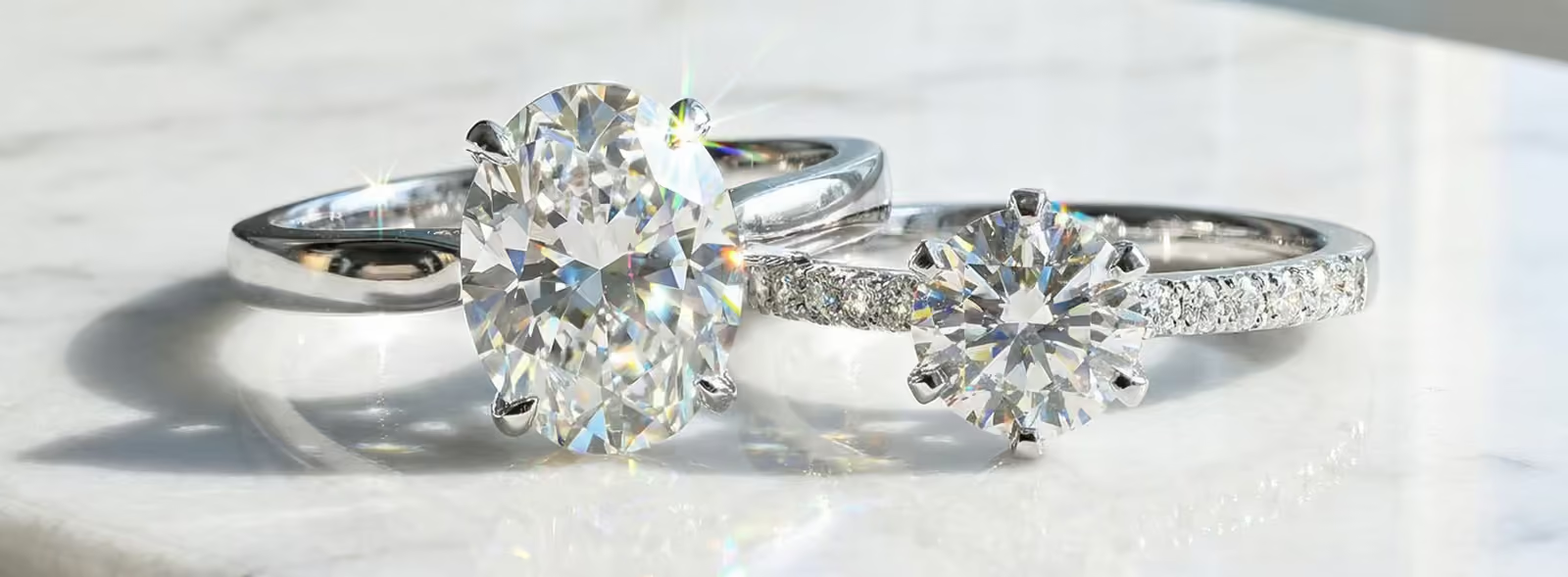
A good cut allows light to enter the diamond and return through its surface, creating a characteristic brilliance and refraction of light. This play of light is called scintillation.
For a round diamond (round brilliant cut), commonly known here as a brilliant-cut diamond, GIA evaluates proportions, symmetry and cut quality. All three parameters are important.
If the cut is poor, even a large diamond can appear dull or lifeless. For this reason, many experts consider cut to be the most important factor in the diamond 4Cs system. The GIA gemmological institute notes that it is the cut quality that determines how light reflects inside the stone and how much brilliance and fire the diamond will have.
Source: GIA: Diamond Cut Guide
Colour: diamond colour
Most diamonds have a very slight tint of colour.
Gemmological laboratories use a scale from D to Z, where:
- D is a completely colourless diamond
- Z is a diamond with a more pronounced tint
In practice, the differences between adjacent categories are often very subtle and difficult to notice without direct comparison.
At Zlatara Andrejević, we recommend diamonds with a colour grade from D to G. Colour H is still considered white, but practice shows it often pairs better with a yellow-gold engagement ring.
Our certified diamond experts with long-standing experience will advise you on how to find the perfect balance between aesthetics and budget.
If you wish to understand how colour and other characteristics affect the price, view our guide to engagement ring budgeting.
Clarity: diamond clarity
Clarity describes the presence of natural inclusions or microscopic imperfections inside the stone. These features are a natural part of the diamond's formation process. In most cases, inclusions are only visible under magnification.
When experts evaluate diamond clarity, standard procedure requires doing so under 10X optical magnification using a gemmological loupe or microscope. Consequently, many buyers choose diamonds where inclusions are not visible to the naked eye, achieving an excellent balance between quality and price. These carry grades of VS2, VS1 or better.
How the diamond 4Cs work together to affect a diamond's appearance
It is important to understand that the 4C characteristics are always viewed together.
For example:
- a slightly smaller diamond with an excellent cut can look more beautiful
- a diamond with a subtle colour tint can look perfect in a specific setting
- inclusions that are not visible do not affect the aesthetics of the stone
Choosing a diamond therefore often involves a balance between all characteristics, rather than focusing on a single factor. According to diamond industry market analysis, buyers most often look for a balance between size, quality and budget, instead of concentrating on just one parameter.
Source: De Beers: Diamond Insight Report
How to quickly assess diamond quality
If you are choosing a diamond for the first time, a few simple steps can help you quickly assess its quality:
- check the cut quality: the cut has the greatest impact on a diamond's brilliance
- review the diamond certificate which confirms its characteristics
- compare several diamonds of similar size to see the difference in brilliance and proportions
- pay attention to the balance between the 4C characteristics, carat weight, colour, clarity and cut
In practice, a diamond with a good balance of these characteristics often looks finer than a stone that excels in only one single attribute.
A diamond in a ring: the bigger picture
Although the 4Cs explain the quality of the stone, choosing an engagement ring involves other elements as well:
- the design of the ring
- metal (yellow, white or rose gold)
- the style that suits the wearer
- budget
If you are just beginning your search, we recommend reading our guide: How to choose the perfect engagement ring
Speak to an expert
Understanding diamonds can seem complicated, but with expert guidance it becomes much simpler.
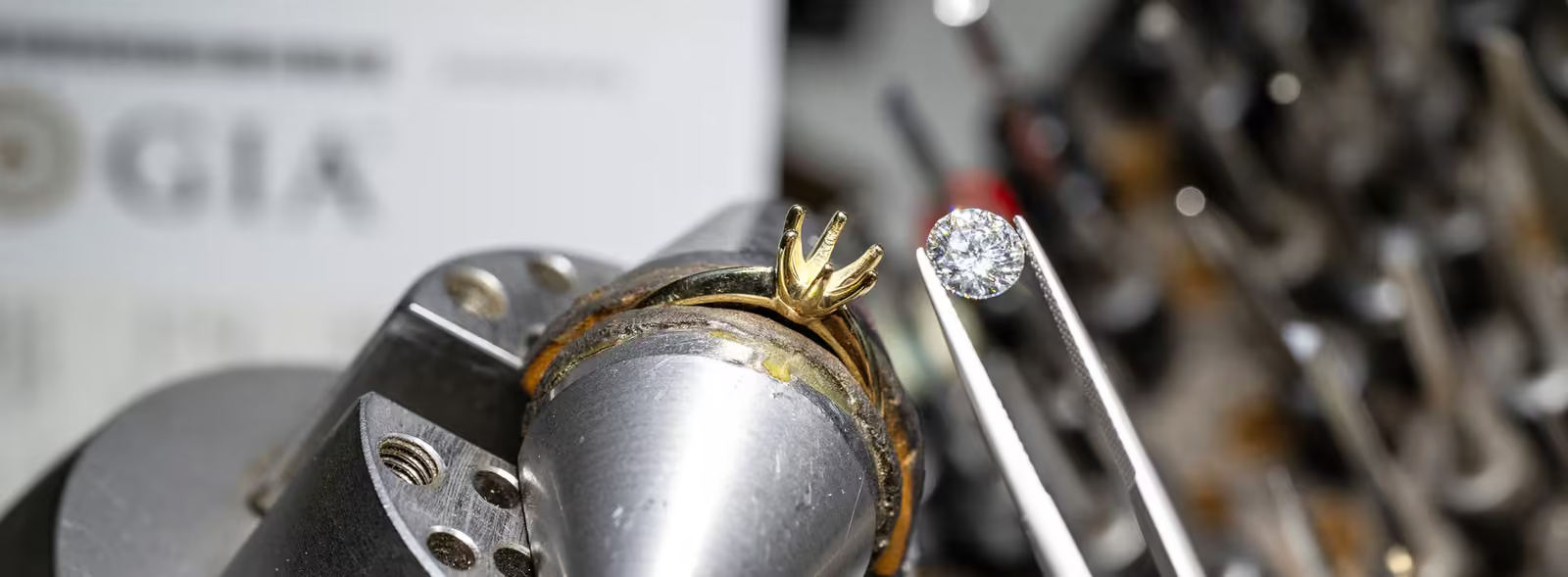
At Zlatara Andrejević, three qualified GIA diamond and gemstone experts help customers understand the differences between diamonds and find the stone that best suits their wishes and budget.
FAQ: The diamond 4Cs
1. What do the diamond 4Cs stand for?
The 4Cs represent the four basic characteristics of a diamond: carat weight, cut, colour and clarity.
2. Which factor affects the appearance of a diamond the most?
Cut quality has the greatest impact on brilliance and light reflection.
3. Is a larger diamond always a better choice?
Not necessarily. A diamond with an excellent cut can look more impressive than a larger stone of lower quality.
4. Can colour differences be seen with the naked eye?
In many cases, the differences are very subtle and only noticeable upon careful comparison.
5. Do inclusions affect the appearance of a diamond?
In most cases, inclusions are not visible without magnification and do not significantly affect the aesthetics of the stone.
6. Which of the 4Cs affects the price of a diamond the most?
Price depends on a combination of all factors, but a higher carat weight and better cut quality often have the greatest impact on the diamond's value.
7. Is it possible to find a good diamond on a limited budget?
Yes. By properly balancing the 4Cs, it is possible to find a diamond that looks very beautiful while keeping the price within your planned budget.
Text prepared by:
- Aleksandar Andrejević, GIA GG diploma, qualified expert in diamonds and coloured gemstones, 16 years of experience in jewellery design and crafting
- Kosta Andrejević, GIA Graduate Diamonds, 50 years of experience in crafting and designing exclusive jewellery
- Andreja Andrejević, GIA GG diploma, qualified expert in diamonds and coloured gemstones, 18 years of experience in fine diamond setting