
Diamond certificates: GIA, IGI, and HRD: how to know what you are buying
9 March 2026
One of the first questions serious buyers ask when choosing a diamond is:
"How can I be sure that this diamond is of the quality being presented to me?"
The answer is simple: a diamond certificate.
Without an independent certificate, a buyer must rely almost entirely on the seller's word. With a certificate, the diamond's characteristics become clearly defined and verifiable.
That is precisely why a certificate represents one of the most important elements of security when buying an engagement ring.
According to diamond market analyses, the vast majority of diamonds sold in international trade carry a certificate from an independent gemmological laboratory, as it enables a transparent comparison of quality and facilitates stone valuation.
Source: De Beers Diamond Insight Report
What is a diamond certificate
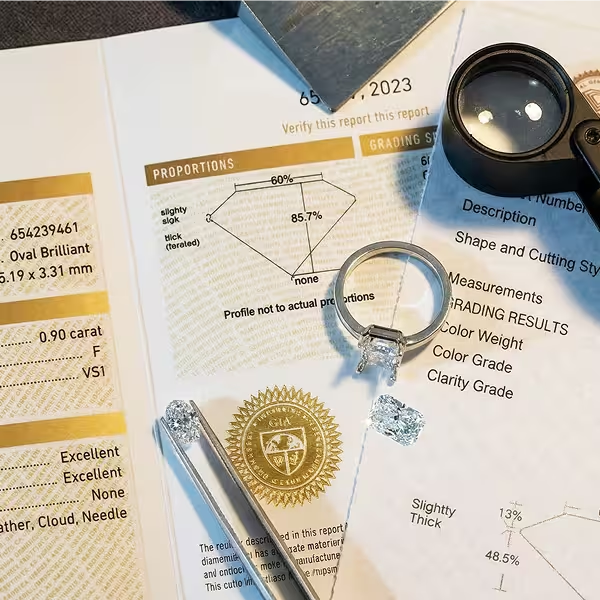
A diamond certificate is an independent gemmological report issued by an internationally recognised institution. It describes all key characteristics of the stone, from carat weight and colour to clarity and cut quality.
In other words, the certificate is the diamond's ID card.
It defines the basic parameters known as the 4Cs:
- carat (carat weight)
- cut
- colour
- clarity
This grading system was developed by the Gemological Institute of America (GIA) and today serves as the global standard for diamond quality assessment.
Source: Gemological Institute of America: 4Cs of Diamond Quality
If you would like a more detailed explanation of these criteria, see the guide The 4Cs of diamonds: a simple guide to diamond quality.
Why a certificate is important when buying an engagement ring
An engagement ring is a purchase rarely repeated in a lifetime. Therefore, buyers want assurance that the diamond they choose truly possesses the quality attributed to it.
A certificate provides precisely that peace of mind because it:
- enables an objective comparison of diamonds
- confirms the characteristics of the stone
- provides transparency when buying
- preserves the long-term value of the ring
In practice, a diamond with a relevant certificate is often much easier to appraise than a stone without such documentation.
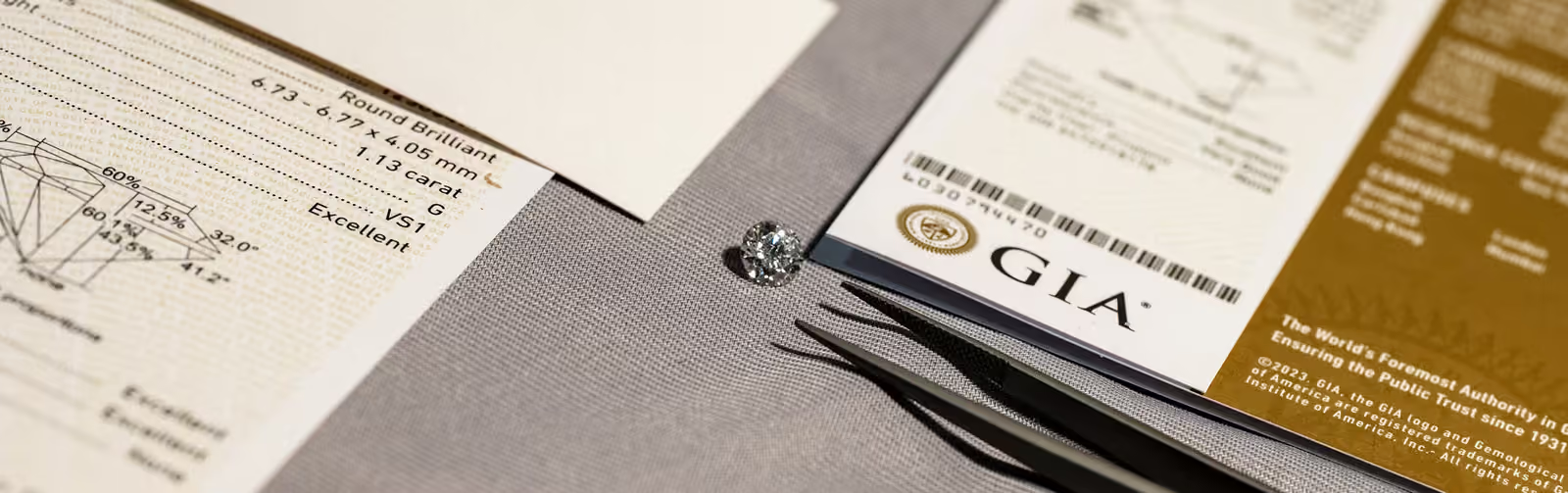
The most famous diamond certificates
There are several internationally recognised gemmological institutions that issue certificates.
The most famous are:
GIA: Gemological Institute of America
GIA is one of the world's most famous gemmological institutions. It developed the diamond grading system used today as the global standard.
GIA certificates are known for strict and consistent quality assessment, which is why they are considered the gold standard.
IGI: International Gemological Institute
IGI is an international gemmological laboratory with a large presence in Europe and worldwide. Certificates from this institution are frequently used for engagement rings and luxury jewellery.
HRD Antwerp
HRD is a European gemmological institution based in Antwerp, one of the world's most important diamond trading centres.
Their certificates are particularly valued in Europe.
Besides the mentioned gemmological laboratories that issue certificates for diamonds, there are others such as: EGL, European Gemological Laboratory, De Beers Institute of Diamonds (DBIOD), AGS, American Gem Society Laboratories, and many others.
Advice from the workshop
Buyers sometimes think a certificate is just a formality.
In practice, it can reveal differences that are not visible at first glance, such as the cut quality or stone proportions.
Two diamonds of similar size can have a completely different visual effect precisely because of these details.
Are all certificates the same
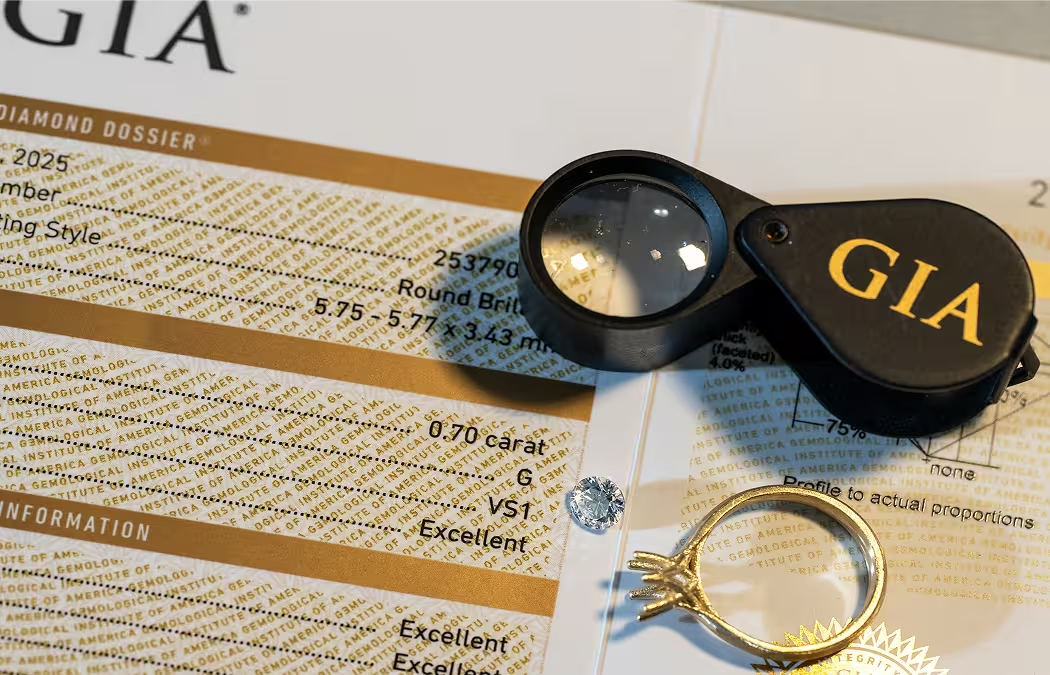
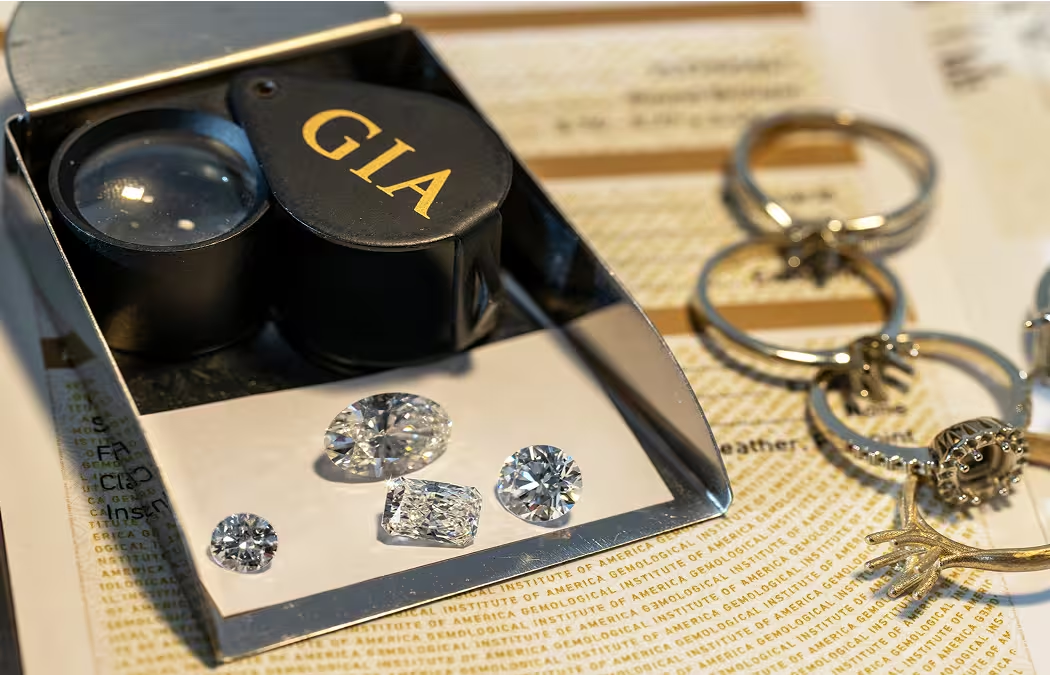
It is important to understand that not all documents accompanying a diamond are the same. Some sellers issue internal documents or "certificates" that are not the result of an independent gemmological evaluation.
Such documents may have informative value, but they do not carry the same weight as certificates from internationally recognised institutions.
For this reason, it is always a good idea to check:
- who issued the certificate, i.e. whether they have formal expertise as a qualified diamond specialist
- whether the institution has an international reputation
- whether there is an option to verify the certificate online
How to verify a diamond certificate
Verifying a diamond certificate is a simple procedure that can provide added assurance when making a purchase.
In most cases, three steps are enough:
- find the certificate identification number on the document
- open the official website of the gemmological laboratory that issued the certificate (e.g. GIA, IGI or HRD)
- enter the certificate number into the search bar on the laboratory's website
This allows you to confirm that the certificate actually corresponds to that specific diamond.
The certificate as part of a wider picture
Although a certificate is very important, it is only one part of the overall assessment of a diamond. The final choice of ring often involves other factors:
- ring design
- craftsmanship quality
- the style that suits the wearer
- budget and long-term value
If you would like to understand how all these elements come together, we recommend our guide: How to choose the perfect engagement ring
Speaking to a jeweller: often the fastest way to get answers
While the internet offers plenty of information, speaking with an expert often clarifies doubts much faster.
At Zlatara Andrejević, three qualified GIA diamond and gemstone specialists help customers understand the differences between diamonds and certificates, ensuring a confident and informed choice.
FAQ: Diamond certificates
1. What is a diamond certificate?
A certificate is an independent gemmological document describing a diamond's characteristics, including its carat weight, colour, clarity and cut.
2. Which diamond certificates are the most well known?
The most renowned international certificates are GIA, IGI and HRD.
3. Does every diamond have a certificate?
No. Smaller diamonds below 0.3 ct (or 0.2 ct) often do not have individual certificates, whereas larger and more valuable stones almost always do.
4. How can I verify the authenticity of a certificate?
Every certificate has a unique number that can be verified on the official website of the institution that issued it.
5. Does a certificate guarantee the quality of a diamond?
A certificate does not provide a financial valuation, but it precisely defines the characteristics of the stone, allowing an objective comparison of quality.
6. Is GIA the most famous diamond certificate?
GIA is one of the most respected and rigorous gemmological institutions in the world, and its diamond grading system serves as the global standard in the diamond industry.
7. Is it possible to check a diamond certificate online?
Yes. Most international gemmological laboratories allow certificate verification using the unique identification number on their official website.
8. Do all certified diamonds have a laser-inscribed certificate number?
No, but all recently certified diamonds have their certificate number laser-inscribed on the diamond's girdle.
Text prepared by:
- Aleksandar Andrejević, GIA GG diploma, qualified expert in diamonds and coloured gemstones, 16 years of experience in jewellery design and crafting
- Kosta Andrejević, GIA Graduate Diamonds, 50 years of experience in crafting and designing exclusive jewellery
- Andreja Andrejević, GIA GG diploma, qualified expert in diamonds and coloured gemstones, 18 years of experience in fine diamond setting