
What You Should Know About Diamonds
What Is a Diamond
A diamond is a crystalline form of carbon formed deep within the Earth under extreme pressure and temperature. The formation process takes billions of years, which makes diamonds among the oldest natural materials on the planet.
Thanks to their exceptional hardness and ability to reflect light, diamonds possess a unique brilliance that makes them one of the most prized gemstones in the world of jewellery.
Is a Diamond the Hardest Natural Material?
One of the most common questions is whether a diamond is truly forever. A diamond is known as the hardest natural material on Earth. On the Mohs scale of hardness, it has the maximum value of 10, which means it can scratch all other natural minerals.
Because of this, a diamond is exceptionally resistant to scratches and suitable for daily wear in jewellery, especially in engagement rings. However, hardness does not mean a diamond is completely indestructible. Like any crystal, a diamond can chip or crack if subjected to a hard blow at a specific angle.
It is precisely this combination of hardness, rarity and extraordinary brilliance that has made diamonds a symbol of durability and eternity throughout history.
Why Do Diamonds Sparkle?
A diamond's brilliance comes from the way it reflects and refracts light. When a diamond is cut correctly, light enters through the top surface of the stone, bounces off its facets and returns back to the viewer's eye.
Because of this, cut quality has a crucial impact on how brilliant a diamond will look. If you want to understand why the cut is so important, take a look at our diamond 4Cs guide.
Why Diamonds Are Special in the World of Jewellery
Diamonds hold a special place in the world of fine jewellery because they uniquely combine natural rarity, exceptional durability and a light that gives them their recognisable beauty. That is why they have become a symbol of important life moments, engagements, weddings, anniversaries and gifts of lasting value.
In addition to engagement rings, they are also frequently chosen for other types of jewellery, such as diamond rings, diamond bracelets, diamond earrings, diamond necklaces, diamond pendants, wedding bands with diamonds and diamonds in a blister.
It is precisely these characteristics that make diamonds one of the most sought-after choices in luxury jewellery, often representing a gift with lasting emotional and material value.
What the Diamond 4Cs Mean
The 4Cs of a diamond represent the international standard for evaluating diamond quality. This system, based on the initial letters of each concept, covers four key characteristics: C arat (weight), C ut, C olour and C larity. The combination of these four factors determines the appearance, brilliance and value of every diamond.
At Zlatara Andrejević, we often go through the process of selecting a diamond for an engagement ring together with the customer, as a proper understanding of the 4Cs makes a decisive difference between an average diamond and a stone that truly makes an impression.
How Diamond Quality Is Evaluated
The 4Cs system allows for precise determination of a stone's characteristics and is used worldwide in gemmology.
The four basic criteria are:
- Carat - diamond carat weight
- Cut - cut quality
- Colour - stone colour
- Clarity - diamond clarity
You can read a more detailed explanation of these factors in our guide The 4Cs of diamonds.
The diamond quality assessment system known as the 4Cs was developed by the Gemological Institute of America (GIA), one of the most renowned gemmological institutions in the world. Today, this standard is used globally to assess diamond quality.
Feature
What it means
How it affects the diamond
Carat
Diamond mass
Larger diamonds are rarer and usually more expensive.
Cut
Cut quality
Determines how much light the diamond will reflect and how much it will sparkle.
Colour
Stone colour
Less colour means higher quality and higher value.
Clarity
Diamond clarity
The number and visibility of inclusions in the stone.
Cut - diamond cut+
The cut or crafting of a diamond involves several factors: proportions, symmetry and cut quality. A five-grade descriptive scale: Excellent, Very Good, Good, Fair and Poor gives an assessment of the light performance of a specific diamond. Experts often emphasise that this is one of the most important parameters affecting the beauty of the stone.
At Zlatara Andrejević, we do not recommend buying diamonds graded lower than Excellent or Very Good, regardless of how well rated they are in terms of clarity and colour.
It is important to distinguish the cut from the shape. Cut indicates the quality of the stone's crafting, while shape describes its form.
Most popular diamond shapes
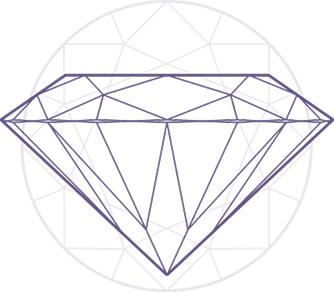
The shape of a diamond represents the style of cutting and has a major influence on the appearance of an engagement ring or other piece of jewellery. Popular diamond shapes include Round brilliant cut, Oval, Pear shape, Marquise, Heart shape, Cushion, Princess, Emerald, Radiant and Asscher.
If you would like to see how different diamonds look in an engagement ring, explore our collection of engagement rings.
Colour - diamond colour+
It is widely believed that only colourless diamonds exist, but that is not entirely true. Diamonds come in various colours, though colourless or near-colourless specimens are the most common on the market. Absolutely colourless diamonds are the most valuable, with the exception of rare fancy colours such as blue, rose or red.
Colour grading is performed by determining how close the stone is to an absolute absence of colour. Less colour means higher quality and greater value. For fancy colours, the opposite rule applies: the more intense and pure the colour, the higher the price.
In general, the larger the stone, the easier it is to notice the presence of colour. If the diamond is set in jewellery, the metal colour can partially mask or enhance the stone's colour. As a result, the colour of a set stone cannot be determined as accurately as that of an unset one.
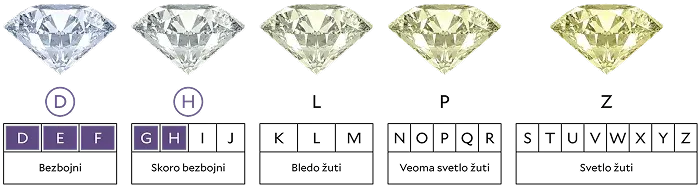
GIA grades diamond colour using letters from D to Z, where D is the highest grade, meaning the stone is completely colourless. D, E and F colour diamonds are considered colourless, G, H, I and J near-colourless, while others feature more noticeable shades of yellow, brown or grey.
Experts at Zlatara Andrejević often recommend setting H or I colour diamonds in yellow gold, as subtle traces of colour are less noticeable in this type of jewellery, offering a very good quality-to-price ratio.
Diamond fluorescence
Fluorescence is a phenomenon where certain diamonds, when exposed to ultraviolet light, emit a blue, or less frequently green, yellow or red glow. Sometimes this effect is more pronounced and can even be noticed in daylight.
Faint fluorescence generally does not affect the appearance or price of the stone, whereas stronger fluorescence can, in some cases, create a slightly hazy appearance, which may lower the price.
Clarity - diamond clarity+
Nature almost never creates anything completely pure and perfect. Diamonds in which experts, using 10x optical magnification, find neither internal inclusions nor external blemishes are rare, yet they do exist.
Such stones are described as Flawless or loupe clean and typically command a very high price. On the other end of the scale are diamonds with a higher number of inclusions that can affect the stone's appearance, durability and beauty. Between these two extremes lie diamonds whose inclusions are easier or harder to spot, but do not necessarily have a negative impact on beauty and durability.
It is important to emphasise that a stone with inclusions is not automatically a bad stone. Inclusions sometimes serve as a way to identify the stone, giving it a unique "signature" while also serving as proof that the stone is not an imitation.
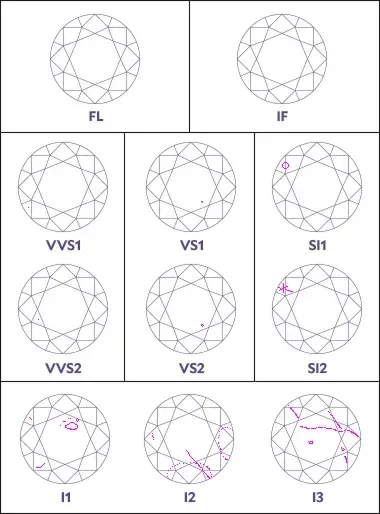
Diamond clarity scale
- FL - Flawless - no inclusions under 10x magnification
- IF - Internally Flawless - no internal inclusions, only minute surface blemishes
- VVS1 / VVS2 - very, very small inclusions, difficult to see under 10x magnification
- VS1 / VS2 - very small inclusions visible only under 10x magnification
- SI1 / SI2 - easily noticeable inclusions under 10x magnification
- I1 / I2 / I3 - inclusions that affect appearance and are often visible to the naked eye
Carat - carat weight+
Carat or weight is a concept that is identical across all standards: 1 ct = 0.20 g. A larger stone is generally worth more, but with diamonds, the price increases progressively as weight increases because large crystals are rare in nature.
For example, a one-carat diamond can cost significantly more than four 0.25-carat diamonds of the same quality. It is standard practice to measure diamonds with accuracy to two decimal places, so a certificate will state a weight such as 1.23 ct.
For diamonds already set in jewellery, the weight cannot always be measured precisely and is instead estimated based on the stone's dimensions and cut shape.
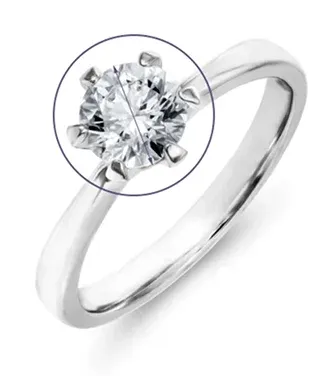
Which is the most important C in a diamond?
Many experts consider the cut to be the most important factor in a diamond because it directly influences how the stone reflects light. A diamond with an excellent cut can appear significantly brighter than a larger diamond with a poorer cut.
Diamond certificates
For higher-value diamonds, a certificate is an important document confirming the stone's characteristics. Certificates are issued by independent gemmological institutions that evaluate diamond quality according to international standards.
The most prominent gemmological laboratories are:
- GIA - Gemological Institute of America
- IGI - International Gemological Institute
- HRD - Hoge Raad voor Diamant
You can read more about how certificates work in our guide Diamond certificate - GIA, IGI and HRD.
How to read a GIA diamond certificate
A GIA certificate is one of the best-known and most reliable documents in the diamond world. It contains all key information about the stone: weight, colour, clarity, cut, proportions and other technical specifications that allow an accurate quality assessment.
Once you understand the basic logic of the 4Cs system, reading a certificate and comparing different diamonds becomes much easier. That is precisely why a certificate is not merely a formal document, but an essential tool that gives the buyer confidence when making a choice.
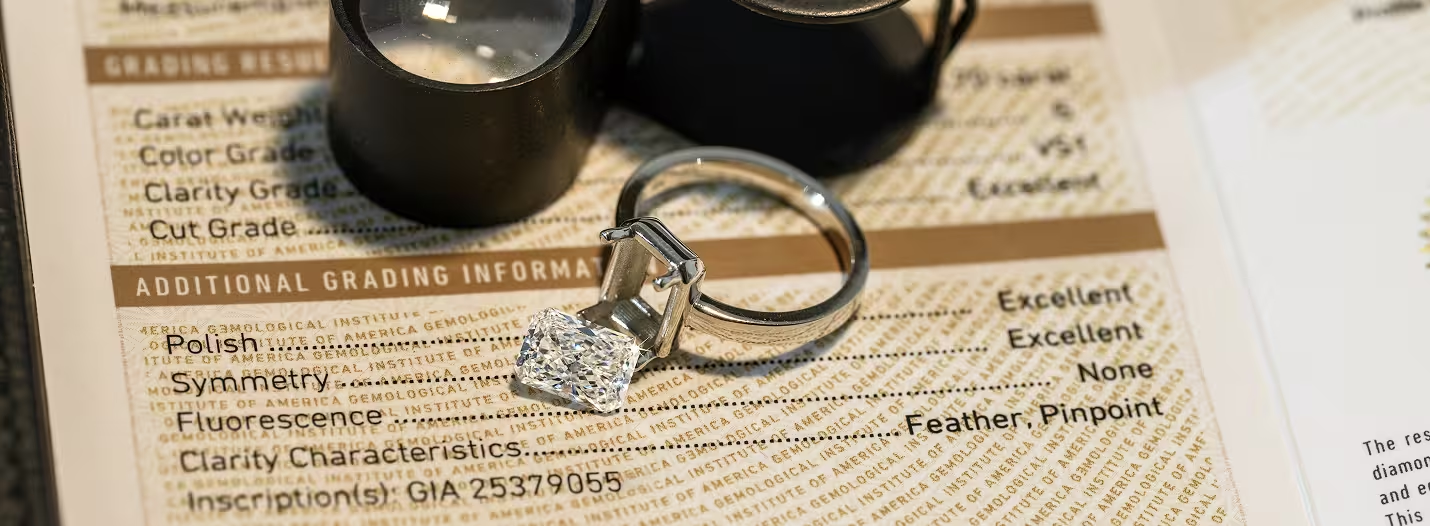
How to test if a diamond is real
There are various diamond imitations on the market, such as cubic zirconia or moissanite, which can look similar to a real diamond at first glance. For this reason, it is important to know how the authenticity of a stone is verified.
The safest way is gemmological analysis and a certificate from a renowned laboratory, such as GIA, IGI or HRD. The certificate contains precise information about the diamond's characteristics and allows its origin and quality to be verified.
Advice for so-called home tests can sometimes be found online, but these are not reliable. Professional appraisal with the appropriate equipment is always the safest way to confirm the authenticity of a diamond.
In reputable jewellery houses, diamonds already come with documentation and verifiable origin, giving buyers extra peace of mind when making their choice. At Zlatara Andrejević, every diamond is inspected by experts holding GIA diplomas, giving buyers additional confidence when selecting a stone.
Natural and lab-grown diamonds
On the market today there are natural diamonds, but also diamonds produced in laboratory conditions. Although they share the same physical properties, they differ in origin and how they are created.
For some buyers, the rarity of a natural diamond is key, whilst others choose a lab-grown diamond due to its more accessible price. Both natural and lab-grown diamonds are graded according to the same quality criteria, including the 4Cs standard.
If you would like a detailed comparison, read our guide Natural or lab-grown diamond.
Diamonds in the world of fine jewellery
Throughout history, diamonds have become one of the most important elements of fine jewellery. Their exceptional hardness, rarity, and ability to reflect light in a unique way make them a stone that symbolises durability, elegance, and special moments in life.
This is precisely why diamonds appear most frequently in the most significant pieces of jewellery, from engagement rings, which mark the start of a shared life, to diamond wedding bands, as well as jewellery gifted to celebrate anniversaries and milestone events.
Within the range at Zlatara Andrejević, diamonds feature across various types of fine jewellery. Categories such as diamond rings, diamond bracelets, diamond earrings, diamond necklaces, and diamond pendants are particularly prominent. Each of these categories has its own aesthetic and symbolism, but they all share the fact that the diamond remains the central element that imparts special value to every piece.
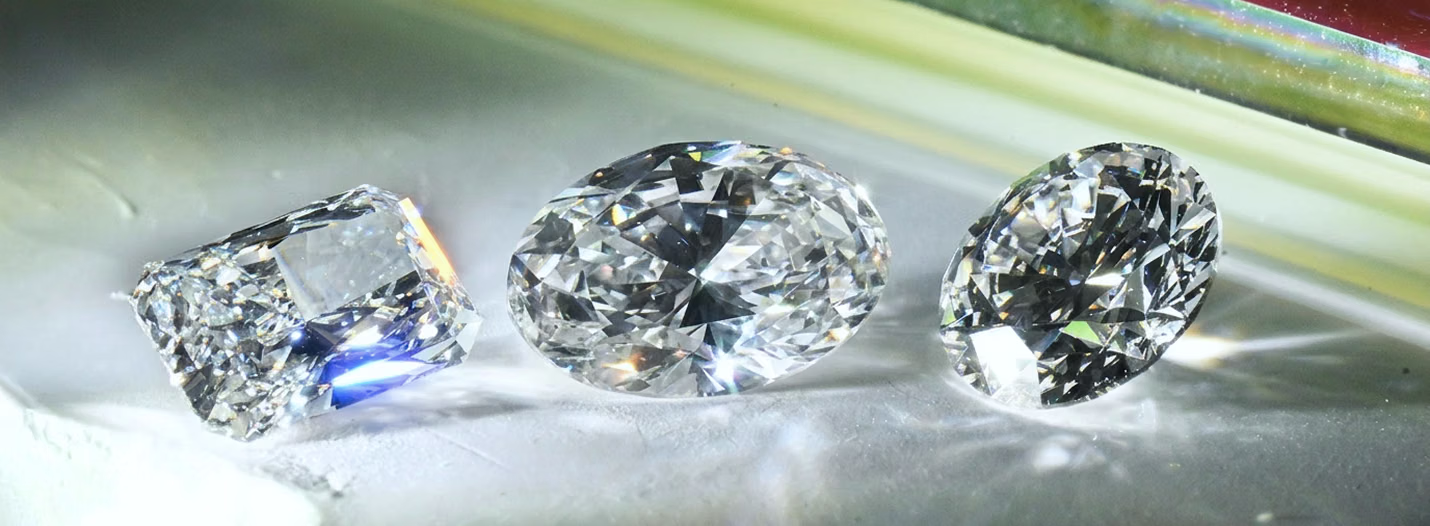
For buyers wishing to invest in the stone itself, without mounting it into jewellery, certified diamonds in a blister are also available. They allow for safe keeping of the stone alongside the appropriate documentation, often representing a long-term investment or a gift of exceptional value.
Understanding different types of diamond jewellery can help buyers find a piece that suits their style, occasion, and budget more easily, whether it is an engagement ring, an elegant piece of jewellery for daily wear, or a gift with lasting symbolism.
How to choose a diamond for an engagement ring
When selecting a diamond for an engagement ring, it is important to find a balance between size, quality, and budget. Many buyers choose diamonds between 0.30 and 0.50 carats, as they offer a good balance of size and price.
In nature, larger diamond crystals are rare, so the price of a 1 carat diamond is often significantly higher than the price of two half-carat stones. In any case, the quality of the cut has a major impact on how the stone will look in the ring.
In practice, small details in the combination of cut, colour, and clarity often have a greater impact on the diamond's appearance than the weight of the stone itself. Because of this, buyers often discover they can find a much more beautiful diamond than they expected within their planned budget.
If you want to understand the entire ring selection process, we recommend reading our guide How to choose an engagement ring.
Responsible Sourcing of Diamonds
When buying a diamond, more and more buyers also want to know the origin of the stone they choose. At Zlatara Andrejević, we pay special attention to ensuring that the diamonds we use come from legal and ethically acceptable sources.
All the diamonds we source originate from supply chains that adhere to the Kimberley Process Certification Scheme, an international control system for diamond trading aimed at preventing trade in conflict diamonds.
Furthermore, we source diamonds directly from renowned manufacturers and suppliers, without unnecessary intermediaries in the sales chain. This approach enables buyers to receive diamonds of verified quality at a fair and transparent price.

For us, it is important that buying an engagement ring is not only a wonderful moment, but also a choice that aligns with responsible and sustainable principles in the diamond industry. In the world of fine jewellery, trust in the stone's origin is just as important as its beauty.
Why diamonds are the traditional choice for engagement rings
Due to their hardness, rarity, and exceptional sparkle, diamonds have historically become a symbol of durability and eternal love. It is precisely because of this that a diamond engagement ring represents the traditional choice in many cultures around the world.
Explore our collection of engagement rings
How diamond pricing is determined
The price of a diamond is not determined by its size alone. The value of every stone is formed through a combination of multiple factors, primarily according to the international standard known as the 4Cs: carat (carat weight), cut, colour, and clarity.
The carat weight of a diamond is expressed in carats and is one of the most visible factors influencing the price. Larger diamonds are significantly rarer in nature, so their value increases faster than the weight of the stone itself.
In addition to size, the quality of the cut also has a major influence on price. A diamond with a supreme cut can reflect light in a way that significantly enhances its visual beauty and value, even when other characteristics are slightly lower.
The colour of the diamond also plays an important role. Colourless diamonds are considered the most valuable in the standard white diamond class, while the presence of tint can affect the price. The exception is so-called fancy diamonds in intense colours, which can reach exceptionally high values due to their rarity.
The clarity of the stone refers to the presence of internal inclusions and external blemishes. Diamonds with fewer visible inclusions are rarer in nature and are consequently more valuable.
The price can be further influenced by other factors, such as the shape of the diamond, proportions of the stone, polish quality, fluorescence, as well as the origin and certificate confirming its characteristics. Certificates from renowned gemmological laboratories, such as GIA, IGI or HRD, give buyers assurance that all stone characteristics have been independently verified.
Due to the combination of all these elements, two diamonds of the same weight can have significantly different values. That is precisely why experts often view a diamond as a whole when selecting a stone, seeking the optimal balance among all factors that together determine its quality, beauty, and long-term value.
Why can diamonds of the same size have different prices?
Although at first glance it might seem that diamonds of the same size have a similar value, in practice price differences can be significant. The reason for this is that the stone's weight represents only one of the factors determining its value.
Two diamonds of the same weight can differ in cut quality, colour, and clarity, with each of these characteristics affecting the final price. A diamond with a supreme cut and better clarity can look considerably more beautiful and have a higher value than a larger stone of lower quality.
Prices can also be influenced by additional factors, such as the stone's proportions, the intensity of fluorescence, and the reputation of the laboratory that issued the certificate. This is precisely why experts always assess all characteristics together when evaluating a diamond, rather than looking at stone size alone.
Therefore, it is important for buyers when making a choice not to look at carat weight alone, but to understand how the combination of all characteristics affects the overall appearance and value of the diamond.
Advice from the jeweller
Buying a diamond often comes with many questions, especially when choosing an engagement ring or a piece of jewellery intended to hold lasting value and symbolism. At Zlatara Andrejević, three certified GIA diamond and gemstone experts work to help buyers understand the stone's characteristics and select a ring that suits their wishes, style, and budget.
Get to know us: view the biographies of our creators.
Book an appointment or consultation
Frequently asked questions
Which of the 4Cs is the most important?+
The cut is generally considered the most important factor because it directly affects the diamond's brilliance. A well-cut diamond can make a stone with lower colour or clarity still look exceptionally brilliant.
What is the difference between a diamond's cut and its shape?+
Shape refers to the physical form of a diamond, such as round, oval or princess. Cut refers to the quality of the faceting, proportions and symmetry that allow the diamond to sparkle.
What does eye-clean mean?+
Eye-clean describes a diamond whose inclusions are not visible to the naked eye. This usually corresponds to a clarity grade of VS2 or SI1 and offers a good balance of quality and value.
Which diamond colour is the best?+
D is the highest colour grade, but for a good balance of quality and price, many experts recommend colours from G to H, which appear virtually colourless to the naked eye and are more accessible than the D–F categories.
How much does a 1 carat diamond cost?+
The price depends significantly on the other 3Cs: cut, colour and clarity. For this reason, diamonds of the same weight can differ greatly in price.
Do lab-grown diamonds follow the same 4C rules?+
Yes. Lab-grown diamonds are graded using the same standards as natural diamonds and have the same fundamental quality criteria.
Should I prioritise carat weight or cut quality?+
In most cases, it is better to prioritise cut quality over size alone. A slightly smaller diamond with an excellent cut often appears more beautiful and brilliant than a larger stone with lower craftsmanship.
Text prepared by experts at Zlatara Andrejević
- Aleksandar Andrejević - GIA Graduate Gemologist
- Kosta Andrejević - 50 years of experience in jewellery craft, GIA Diamonds Diploma
- Andreja Andrejević - GIA Graduate Gemologist
This guide is regularly updated to include the latest information on quality, certification and choosing diamonds.
Date of last update:
Guides on diamonds
If you would like to understand in more detail how diamond quality is evaluated and how to choose a stone for an engagement ring, explore our guides:
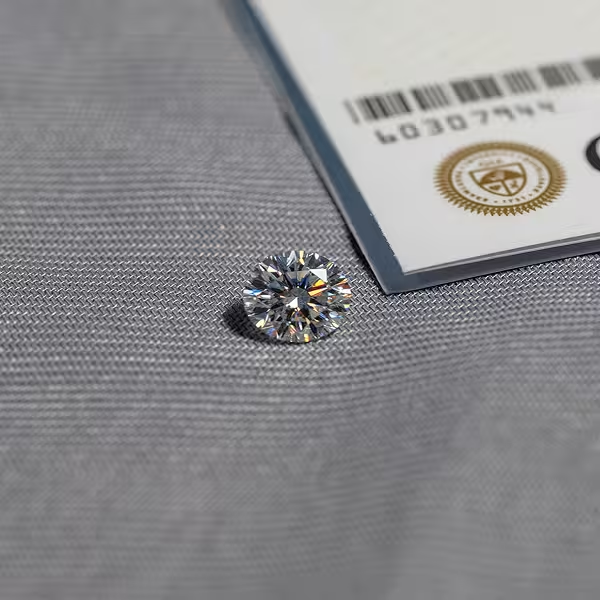
Diamond 4Cs - a guide to diamond quality
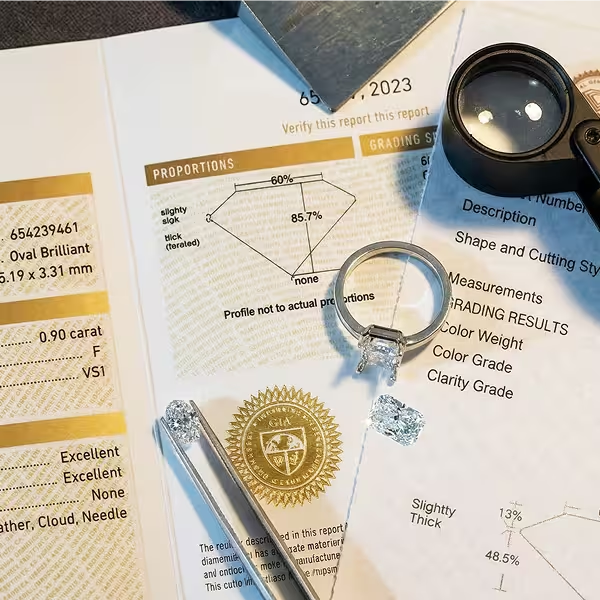
Diamond certificates - GIA, IGI and HRD