
How to choose gold jewellery: a complete buying guide
30 September 2026
We rarely choose gold jewellery simply because we need a new accessory. A ring can mark an important milestone. A necklace can become a piece worn almost every day. Earrings can be the first precious piece of jewellery gifted to someone, while a bracelet or pendant can over time become a keepsake whose sentimental value far exceeds its materials. That is precisely why a good
We rarely choose gold jewellery simply because we need a new accessory.
A ring can mark an important milestone. A necklace can become a piece worn almost every day. Earrings can be the first precious piece of jewellery gifted to someone, while a bracelet or pendant can over time become a keepsake whose sentimental value far exceeds its materials.
That is precisely why a good choice begins before we even look at models.
It is important to understand what kind of gold we are choosing, how the piece is crafted, whether it suits the way we will wear it and, when diamonds or gemstones are involved, what actually determines their quality.
At Zlatara Andrejević, these questions are part of a jewellery craft developed and passed down within our family for over eight decades. Knowledge of gold and alloys, design, jewellery construction, gemmology and setting techniques ensures that jewellery is not viewed merely by what meets the eye at first glance.
Because with jewellery that is meant to last for years, it is not just about what you like today.
It is also about what is made to endure.
In this guide, we walk through the most important decisions when choosing Andrejević gold jewellery, from gold colour and fineness to selecting rings, earrings, necklaces, bracelets, pendants, diamonds and gemstones.
What to know before buying gold jewellery
The most beautiful piece is not necessarily the one that catches your eye first.
A good choice is jewellery that suits the person wearing it, their style, everyday routine and the way they already select other pieces.
Before buying, consider:
- whether the jewellery will be worn daily or occasionally;
- whether you tend to choose yellow, white or rose gold;
- whether you prefer a subtle or striking design;
- whether the new piece should complement jewellery you already own;
- whether you want gold alone or jewellery set with diamonds, pearls or gemstones;
- whether you are buying for yourself or choosing a gift.
The answers to these questions are often more important than current trends.
Fine gold jewellery can be worn for decades. That is why its design should not work just today, but long after seasons or fashions change.
However, design is only one part of the decision.
With finer jewellery, one should also consider gold fineness, alloy composition, craftsmanship, piece construction, finishing touches and, where gemstones are present, the setting technique.
Yellow, white or rose gold: which to choose?
Pure gold is naturally yellow and very soft. To achieve the properties required for jewellery crafting, it is alloyed with other metals to create various gold alloys.
Yellow gold retains gold's signature warm hue. It is timeless, yet its character relies heavily on design: it can look traditional or distinctly contemporary.
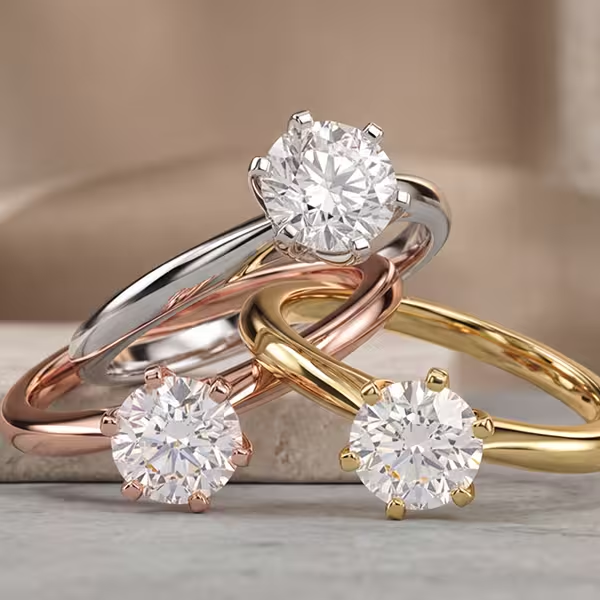
White gold has a brighter, cooler appearance. It complements light diamonds particularly well, making it a popular choice for diamond and engagement rings, earrings and necklaces.
Rose gold is recognisable by its warm pinkish tint, influenced significantly by copper in the alloy. It can possess a delicate character, yet in clean, geometric forms it feels strikingly modern.
There is no universally "best" colour.
What matters more is how a specific alloy works within a particular design, alongside your chosen gemstone and with the jewellery you already wear.
Skin tone can serve as a guide, but it should not be a strict rule when purchasing a valuable piece.
For a more detailed comparison, explore our guide White, yellow or rose gold: which gold to choose?
What does gold carat or fineness mean?
For gold, karats indicate the proportion of pure gold within an alloy.
Pure gold is marked as 24-karat gold, which is gold of very high fineness. However, due to its softness, jewellery crafting uses alloys where gold is combined with other metals.
On jewellery, you will therefore often see a fineness mark expressed in parts per thousand.
For example, a 750 hallmark means the alloy contains 750 parts pure gold per 1,000 parts alloy, or 75% gold, which corresponds to 18-karat gold.
A 585 hallmark indicates 58.5% gold content, which corresponds to 14-karat gold.
It is important to understand that a higher gold proportion is not the sole criterion for finished jewellery quality.
A piece of jewellery is a complete whole.
Its long-term value and how it behaves during wear are also determined by alloy composition, construction, craftsmanship, finishing and, for stone-set jewellery, the setting method.
It is precisely in these details that the distinction is made between jewellery that simply looks beautiful and jewellery thoughtfully crafted to be worn.
How to choose gold rings
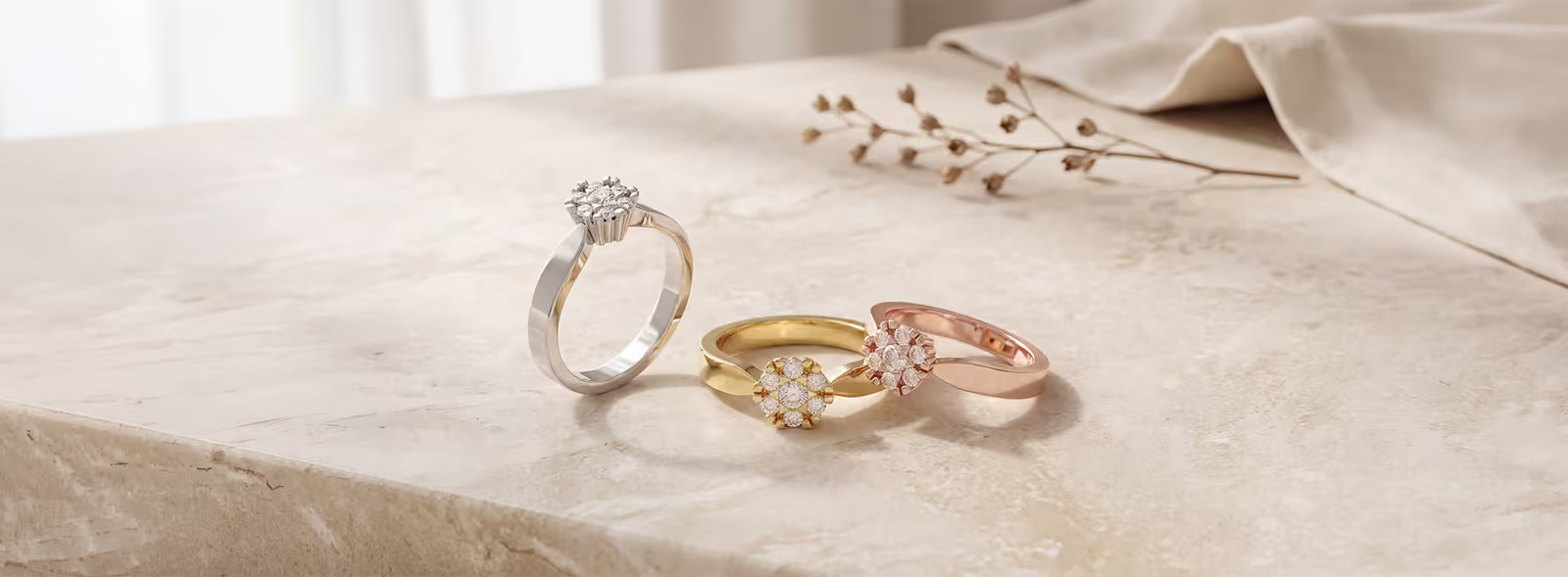
A ring is one of those pieces where aesthetics and practicality must be equally well resolved.
If you plan to wear it daily, pay attention to the profile, width, height of any gemstone, and how it sits on the hand.
A ring that looks impressive but interferes with everyday movements will likely not become a piece you reach for naturally every morning.
For simpler models, it is precisely the proportions, finishing and precision of craftsmanship that define the ring's character.
For models with diamonds or gemstones, stone quality and setting technique are added to this mix.
This is particularly vital when a ring will be worn alongside other pieces. Two rings may look perfect together, even if their profiles or construction are not ideal for long-term contact with one another.
Explore the collection of Andrejević gold rings.
If choosing a diamond, the 4Cs, cut, colour, clarity and carat weight, become an important part of the decision, but they should not be viewed in isolation. The combination of these characteristics determines how a specific stone will look.
How to choose gold earrings
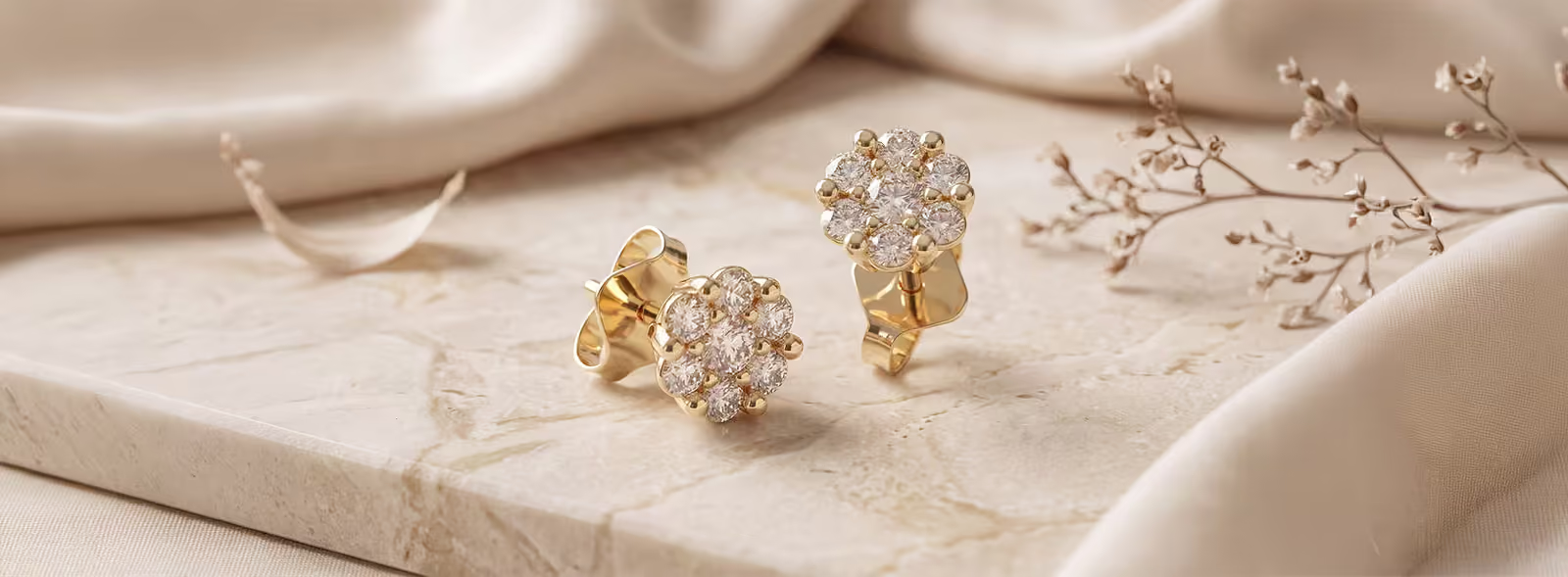
Earrings are one of the simplest ways to bring quality jewellery into your everyday style.
Small, subtle shapes are easy to wear day in, day out. Hoop earrings, drop designs, and earrings set with diamonds or gemstones carry a bolder character.
When selecting, consider proportions, weight, clasp style, gold colour and intended use.
A piece worn for ten hours during the day must be not only beautiful but comfortable to wear.
With stone-set earrings, there is another detail: the pair should be viewed as a whole.
This is especially important with diamonds, where two stones must be carefully selected so they create a harmonious visual result together.
Discover various designs in the collection of Andrejević gold earrings.
How to choose a gold necklace
A necklace rests close to the face and therefore strongly influences your overall look.
Length is one of the primary criteria.
Shorter necklaces accentuate the neck and neckline, whilst longer ones create a different silhouette and leave more room for layering.
Consider also the outfits you will pair it with most often.
A simple gold necklace can become part of a daily look, whereas a diamond, pearl or gemstone gives the piece a different character.
If you plan to wear multiple necklaces together, differing lengths usually create a clearer composition and allow each piece to maintain its own line.
How to choose a gold bracelet?
A bracelet is one of the few pieces of jewellery we see almost continuously while wearing it.
Because of this, comfort is particularly important.
When choosing, check the length, the clasp mechanism and the construction. The bracelet should have enough room for natural movement, but not so much that there is a risk of it slipping off.
Slender gold bracelets are easily combined with a watch and other pieces, whilst more prominent designs can have enough character to be worn alone.
If you plan to wear several bracelets together, in addition to the appearance, you should consider their contact with each other during movement.
Placing a very delicate piece between two more massive bracelets is not always ideal.
Gold pendants: small pieces with great meaning
With a pendant, the value is often not only in the gold or the design.
A symbol, initial, cross, sign or other motif can turn it into a deeply personal piece of jewellery.
This is precisely why Andrejević gold pendants are a natural choice for a birth, christening, birthday, anniversary or another important moment.
However, a pendant should not be considered separately from the chain.
Its weight, dimensions and bail should suit the proportions and construction of the chain on which it will be worn.
The gold colour can be identical if you wish for a completely harmonious whole, or different if the contrast is part of an intentional design choice.
How to choose gold jewellery with diamonds?
When jewellery includes a diamond, the choice becomes more complex, but that is precisely where expert knowledge becomes most valuable.
The quality of a diamond is traditionally described through four basic characteristics known as the 4Cs:
Cut describes the quality of the shaping and proportions of the diamond, strongly influencing how the stone manages light.
Colour in white diamonds refers to the degree of presence or absence of colour.
Clarity describes the internal and external characteristics of the diamond.
Carat represents its weight.
Yet a single number never tells the whole story.
Two diamonds of the same carat weight can look different and have different values.
That is why a combination of characteristics, the proportions of the stone, how it looks in person and the design of the jewellery into which it will be set are all important when making a choice.
For more significant diamonds, reliable gemmological documentation is also key.
In the Andrejević diamond jewellery collection, you can explore rings, earrings, necklaces, bracelets and other pieces set with diamonds.
How to choose jewellery with gemstones?
Sapphire, ruby, emerald, topaz, aquamarine and other gemstones bring colour and a completely different character to gold jewellery.
However, with gemstones, choosing a shade you like is not enough.
Different stones have different physical and optical properties, may undergo different treatments and require a different approach to setting, wearing and maintenance.
This is why, for more precious gemstone jewellery, an expert evaluation holds special value.
A gemmologist can explain the characteristics of a specific stone, whilst goldsmithing expertise allows the stone, metal and setting method to be viewed as a unified whole.
Should gold jewellery match?
Yes, but "matching" no longer means that every piece must be identical.
Yellow, white and rose gold can be worn together. Different textures can sit side by side. Several necklaces of different lengths can create a harmonious whole, just like multiple slender rings or bracelets.
The key lies in proportion and balance.
If one piece is dominant, the others can be more subtle. If you combine several discreet pieces, together they can create an effect that a single striking detail would otherwise have.
However, with fine jewellery there is another question:
Should pieces that look lovely together also be physically worn together?
With rings, bracelets and gemstone jewellery, contact between pieces during everyday wear can be important.
Therefore, combining pieces is not just a question of style.
Read more about this in our guide How to combine gold jewellery: necklaces, earrings, bracelets and rings.
How to choose gold jewellery as a gift?
When selecting jewellery for someone else, start with what they already wear.
Look at which gold colour they choose most often. Pay attention to whether they wear small or large earrings, slender or prominent bracelets, simple necklaces or pieces set with stones.
These are more reliable indicators than asking what is currently popular.
If you do not know the size, earrings, a necklace or a pendant are often a simpler choice than a ring.
For a particularly important moment, a diamond, gemstone or unique and personalised Andrejević jewellery can give the gift an extra personal meaning.
You will also find ideas according to the recipient and occasion among Andrejević gifts, whilst we have covered the selection in detail in our guide How to choose jewellery for a gift: by person and occasion.
How to properly maintain gold jewellery?
A good choice does not end with the purchase.
The way jewellery is worn, stored and maintained affects its appearance and condition over the years.
Fine jewellery should be protected from unnecessary contact with aggressive chemicals and abrasive surfaces. It is advisable to store pieces separately so they do not scratch one another.
With white gold, any rhodium-plated finish should also be taken into account, whilst with diamonds and gemstones, the cleaning method should be adapted not only to the gold, but also to the stone and its setting.
It is especially important to distinguish home cleaning from professional maintenance.
If a stone moves, a clasp no longer functions properly, a ring is misshapen or there is damage to the part holding the stone, cleaning is not the solution; an expert inspection is required.
Read more in our guide How to clean and maintain gold jewellery at home.
How to recognise finely crafted gold jewellery?
With fine jewellery, quality is often hidden precisely in the details we do not examine at first glance.
Look at how the piece is finished, including the side that is not visible while worn. Pay attention to the precision of the joints, the function of the clasp, symmetry, the surface finish and the way the stone rests in its setting.
Profile and comfort are important for a ring. The way the elements move is key for a necklace and bracelet. For earrings, it is the security of the clasp.
With gemstone and diamond jewellery, the setting of the stone is particularly important.
Good design should not merely display the stone.
It must also hold it securely.
That is precisely why the quality of fine jewellery is not assessed solely from above. The construction you barely notice is often what allows a piece to look and function as it should for years to come.
Jewellery chosen today, worn for years
The most precious pieces are often not those we save for special occasions.
They are the ones we spontaneously put on every morning.
The ring we almost never take off. The earrings that go with everything. The necklace that has become part of our look. The bracelet given to us by someone special.
That is why, when choosing, it pays to look beyond the first impression.
Choose quality materials, solid construction and a design that feels truly yours.
If the jewellery features a diamond or gemstones, ask about the stone's characteristics and its accompanying documentation where relevant.
And for a more precious piece, seek expert advice that will not just tell you what to buy, but will help you understand what you are buying.
Andrejević gold jewellery: over eight decades of jewellery expertise
With fine jewellery, beauty is the start of the decision. Expertise is what allows us to understand what lies behind it.
At Zlatara Andrejević, jewellery crafting knowledge is passed down through generations of the Andrejević family, encompassing various disciplines from master craftsmanship and design to gemmology and diamond setting.
Kosta Andrejević is a master craftsman of exclusive jewellery, a designer and a qualified diamond expert.
Andreja Andrejević is a qualified gemmologist and a specialist in master diamond setting.
Aleksandar Andrejević is a qualified gemmologist and jewellery designer.
Such a combination of expertise is particularly important for jewellery that unites precious metal and a valuable stone.
Gold is not viewed separately from the construction of the piece. A diamond is not assessed solely by its carat weight. A gemstone is not chosen by colour alone. And a design does not end with a sketch; it must be precisely executed in the material.
That is why expert guidance involves an understanding of the alloy, construction, proportions, stone, setting, and the way the piece will be worn.
If a ready-made piece cannot express what you are looking for, bespoke and personalised jewellery allows the choice to start from the idea itself, the gold, stone, proportions and design, finishing with a piece crafted for one person.
How to choose the right piece in the end?
When all technical specifications are set aside, a good choice must still pass one simple test:
Will you want to wear it?
Do not choose simply what is currently most eye-catching. Do not choose a gold colour just because it is in trend. Do not choose the largest stone simply because it is the largest.
See how the piece looks on you. How it feels. How it works with the jewellery you already own. And whether it suits the life in which you will actually wear it.
Fine jewellery does not have to wait for a special occasion to hold value.
Sometimes it is everyday wear that gives a piece its story.
Explore the collection of Andrejević gold jewellery or start with the category you are looking for: gold rings, gold earrings, gold necklaces, gold bracelets and gold pendants.
Frequently asked questions about choosing gold jewellery
Which gold is best for jewellery?
There is no single type of gold that is best for every piece and every person. You should consider the fineness and alloy composition, the construction, the purpose of the jewellery, how often it will be worn, and any diamonds or gemstones.
What does the 585 mark on gold mean?
The 585 mark means that the alloy contains 58.5% pure gold, or 585 parts gold per 1,000 parts alloy. This corresponds to 14-karat gold.
What does the 750 mark on gold mean?
The 750 mark indicates an alloy with 75% pure gold, corresponding to 18-karat gold.
Is white or yellow gold better?
Neither is universally better. Yellow gold has a warm, distinctive colour, whilst white gold offers a brighter, cooler look that complements light diamonds particularly well. The choice depends on the design, personal style, and the jewellery you will combine the new piece with.
How do I know which gold colour suits me best?
Look at the jewellery you already wear most often. Skin tone can be a guide, but personal style and your existing collection are often better indicators. Yellow, white, and rose gold can also be combined together.
Which gold jewellery is good for everyday wear?
Simple rings, smaller earrings, delicate necklaces, and comfortable bracelets fit easily into an everyday style. More important than the type of jewellery itself is that the construction suits how often it will be worn and your daily activities.
What should I pay attention to when buying diamond jewellery?
In addition to design, you should consider the diamond's cut, colour, clarity, and carat weight, the setting, and, for significant diamonds, the appropriate gemmological documentation.
How to choose gold jewellery as a gift?
The best clue is the jewellery the person already wears. Pay attention to the gold colour, style, and type of jewellery they choose most often. If you do not know the ring size, a necklace, pendant, or earrings are often an easier choice.
Is more expensive gold jewellery always higher quality?
Not necessarily. The price can depend on the weight and fineness of the gold, the design, complexity of craftsmanship, diamonds or gemstones, and other factors. Quality should be evaluated through materials, construction, finish, precision of craftsmanship, and stone characteristics.
Should gold jewellery be bought according to trends?
A trend can serve as inspiration, but for a more valuable piece, it should not be the main criterion. Jewellery that suits your style and lifestyle is much more likely to be worn and cherished for years to come.